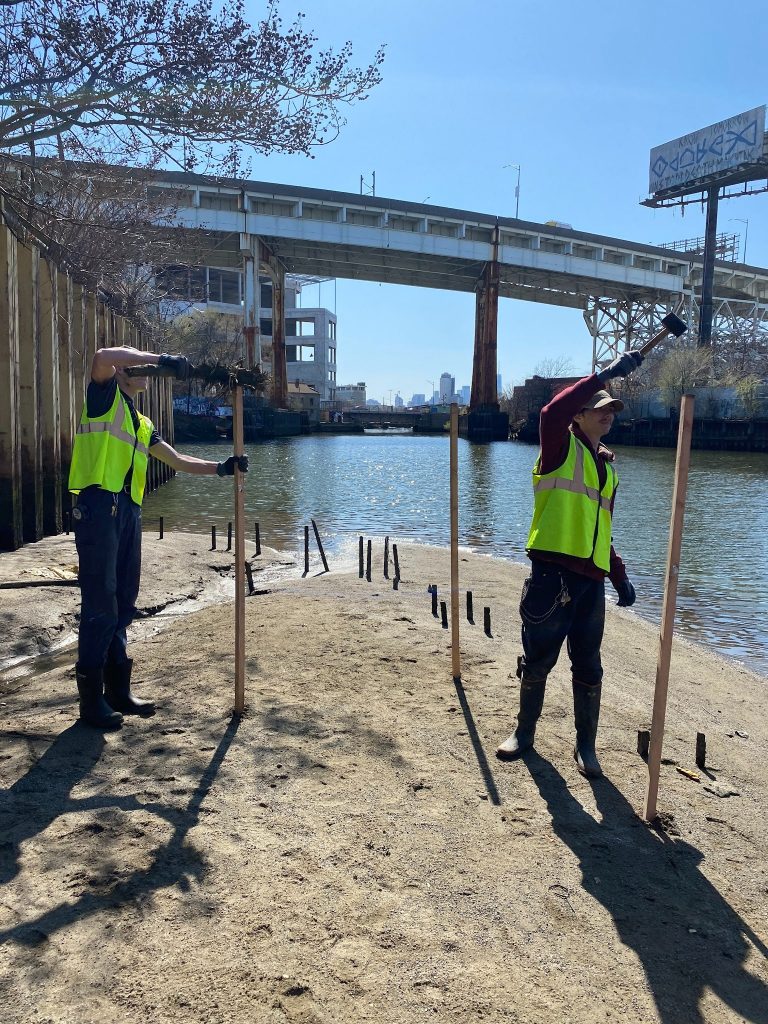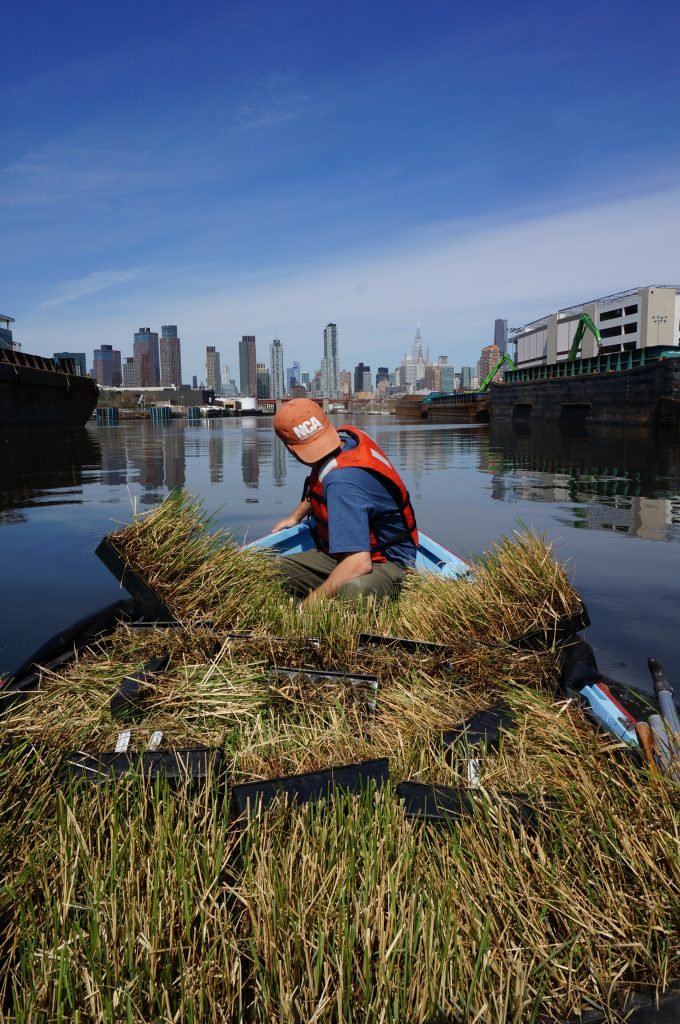
In 2018 NYC DEP installed a pilot salt marsh in Newtown Creek at Dutch Kills. Fresh sand was added to Dutch Kills, elevating the shoreline to ensure it could support the growth of 1,455 square feet of Spartina alterniflora plugs (saltmarsh cordgrass) planted by DEP, Newtown Creek Alliance, and other environmental groups. NCA continues to monitor marine animal and plant life returning to Dutch Kills salt marsh.
Challenges of a Harsh Environment
Salt marshes provide a diversity of ecological benefits, from serving as essential habitat for marine animals and plant life, to improving water quality. Though restoring what was once natural salt marsh is an important step towards improving waterbody health, the plugs have faced no shortage of obstacles. Tidal action and ice floes washed out many of the original plugs, while opportunistic geese feed on the new growth, preventing the saltmarsh cordgrass from persisting season to season.
The First Saltmarsh Cordgrass Replanting
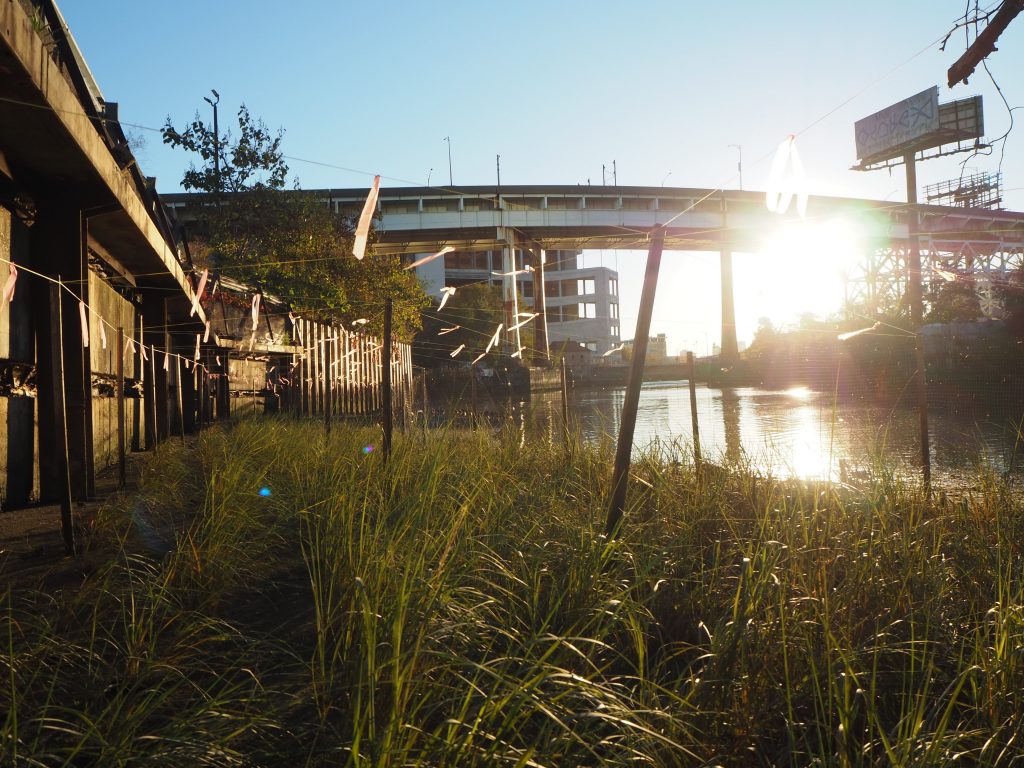
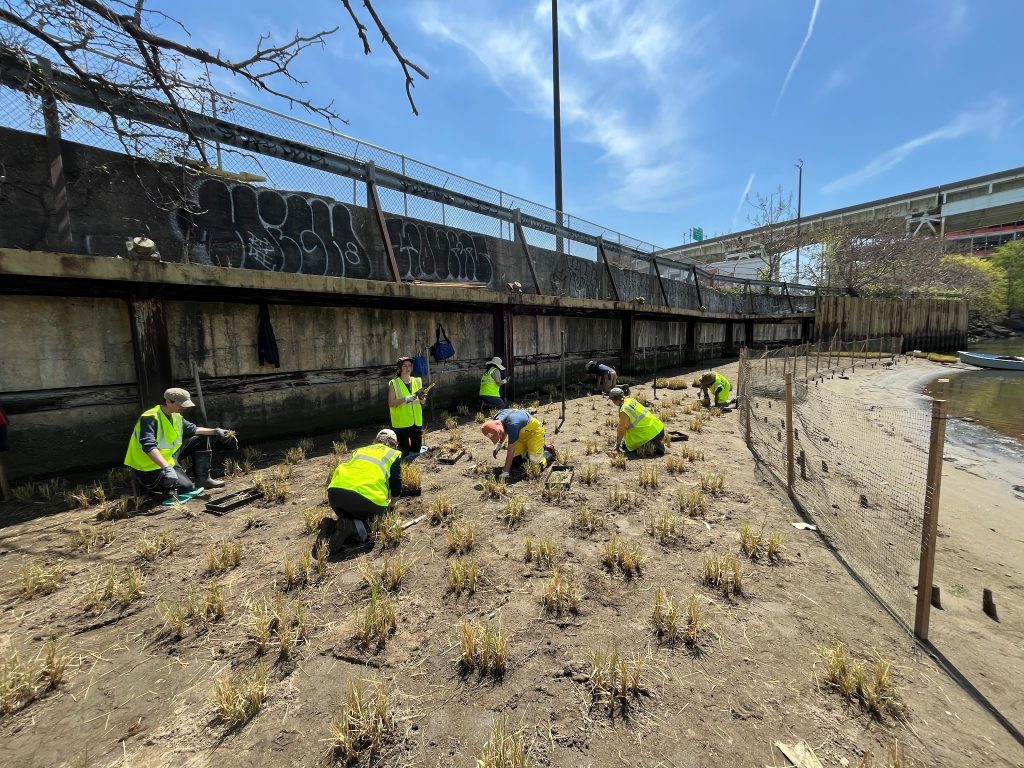
To revive the salt marsh, the NCA Restoration Team began scouting out Dutch Kills shoreline in early 2025. After removing debris and fallen branches, fencing was built, and the restoration site was ready for its first replanting. In April, NCA and volunteers from BBP (Brooklyn Bridge Park), successfully replanted 3,000 plugs of saltmarsh cordgrass at Dutch Kills. By November 2025, the plugs had already grown over two feet in height, demonstrating that Dutch Kills has the potential to sustain a salt marsh ecosystem.
Continued Restoration Efforts
In July 2025, a tree branch collapsed into the restoration site, damaging the fence and requiring multiple days of fence repair and branch removal. In attempts to ward off geese, bright flagging tape was tied along the fencing. The Restoration Team has also completed smaller replanting sessions to replace saltmarsh cordgrass plugs lost to washout.
A Natural Space for All
Dutch Kills salt marsh is viewable from the south side of the Hunter’s Point Avenue Bridge in Long Island City, Queens. NCA has observed raccoon pawprints in the sand, egrets wading among the saltmarsh cordgrasses, and flocks of geese swimming down the Creek. Looking into the Creek and along the shoreline reveals schools of killifish, the presence of nearby horseshoe crabs, and ribbed mussels wedged between rocks.
Document the Process
All work to date will be documented on the project’s website. This website will be updated weekly with blog posts about the salt marsh as part of the 2026 NCA TIDALS Summer Research Fellowship. Fellows will complete weekly surveys of the salt marsh and write journal entries, allowing NCA to both update the public on the state of the marsh and inform future maintenance of this project.