
Visit #1 : June 16, 2026
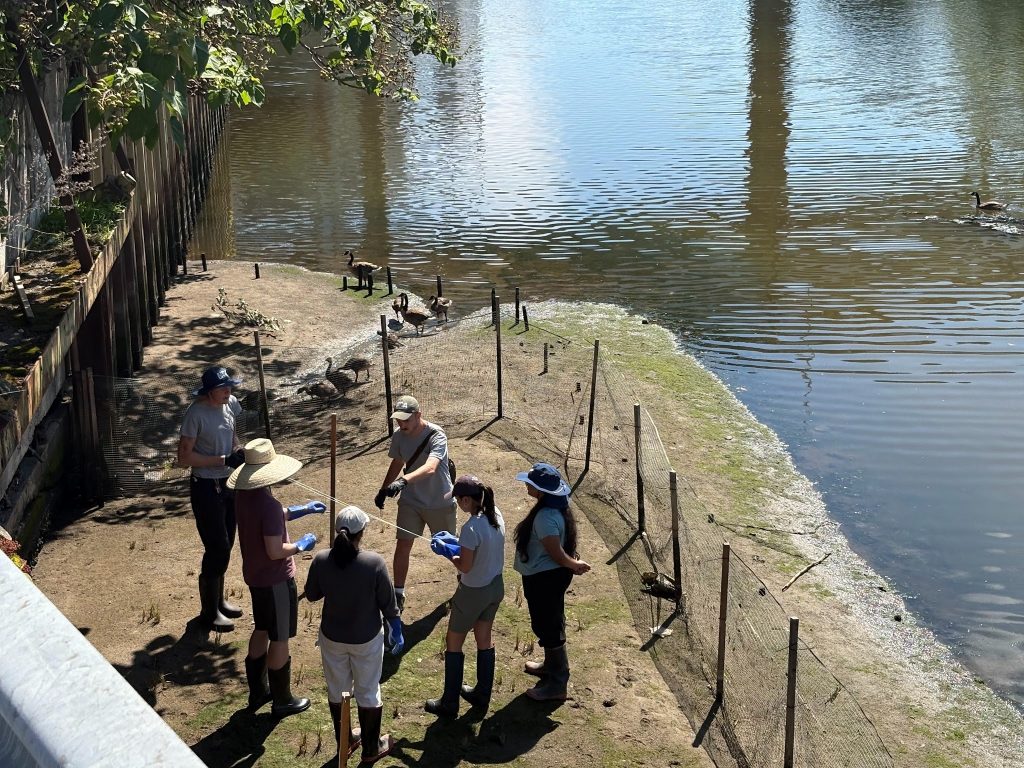
One of the five tidally influenced tributaries of Newtown Creek, Dutch Kills was once part of the active and bustling industrial zone of the Creek. Due to aging infrastructure, its waters are no longer open to commercial boat traffic. In 2018, the NYC DEP installed a pilot project of 1400 cubic yards of salt marsh restoration in Dutch Kills. The intention was to recreate the original ecology of Newtown Creek, which was a sprawling biodiverse salt marsh that provided habitat for numerous species of birds, fish, crabs, and other wildlife. The addition of salt marsh could improve water quality and help mitigate the two hundred years of industry, manufacturing, and pollution that have damaged Newtown Creek. Runoff, heavy metals, raw sewage, and oil dumping have all contributed to the polluted state of the Creek’s sediment and waters.
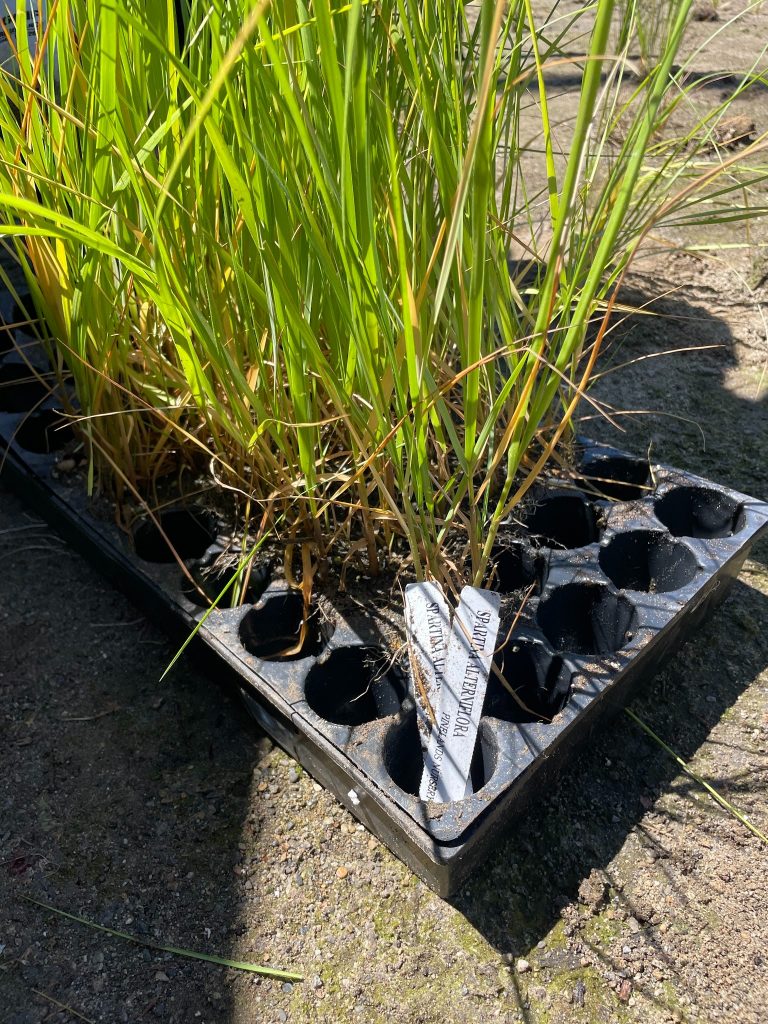
In 2025, NCA and volunteers returned to the restoration site to replant a total of over 3,000 plugs of saltmarsh cordgrass (Spartina alterniflora). The new plugs initially flourished, maturing and growing over two feet tall. Though Dutch Kills no longer harbors commercial maritime vehicles, the Creek conditions still pose many challenges for newly-planted saltmarsh cordgrasses. Flocks of Canada geese (Branta canadesis) feast on the new growth. Tidal activity and ice floes have uprooted both plugs of marsh grass and anti-goose fence posts. Despite these obstacles, the Restoration Team continues to visit the Dutch Kills site, replanting saltmarsh cordgrass, monitoring marsh growth, reinforcing geese deterrents, and noting wildlife presence.
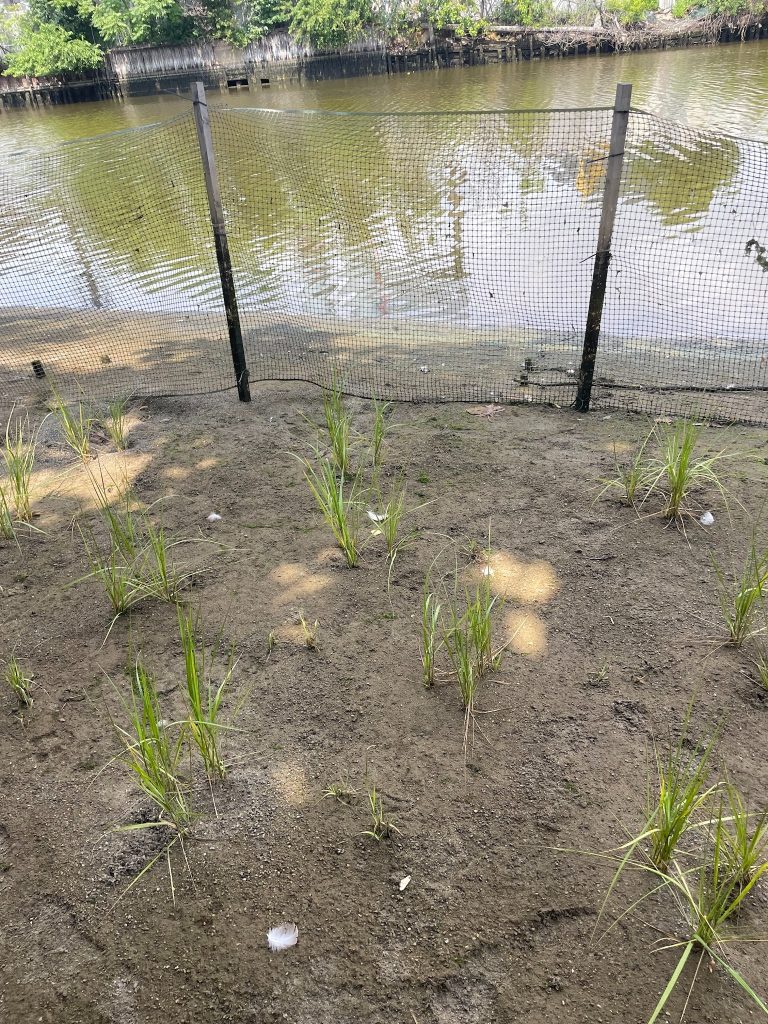
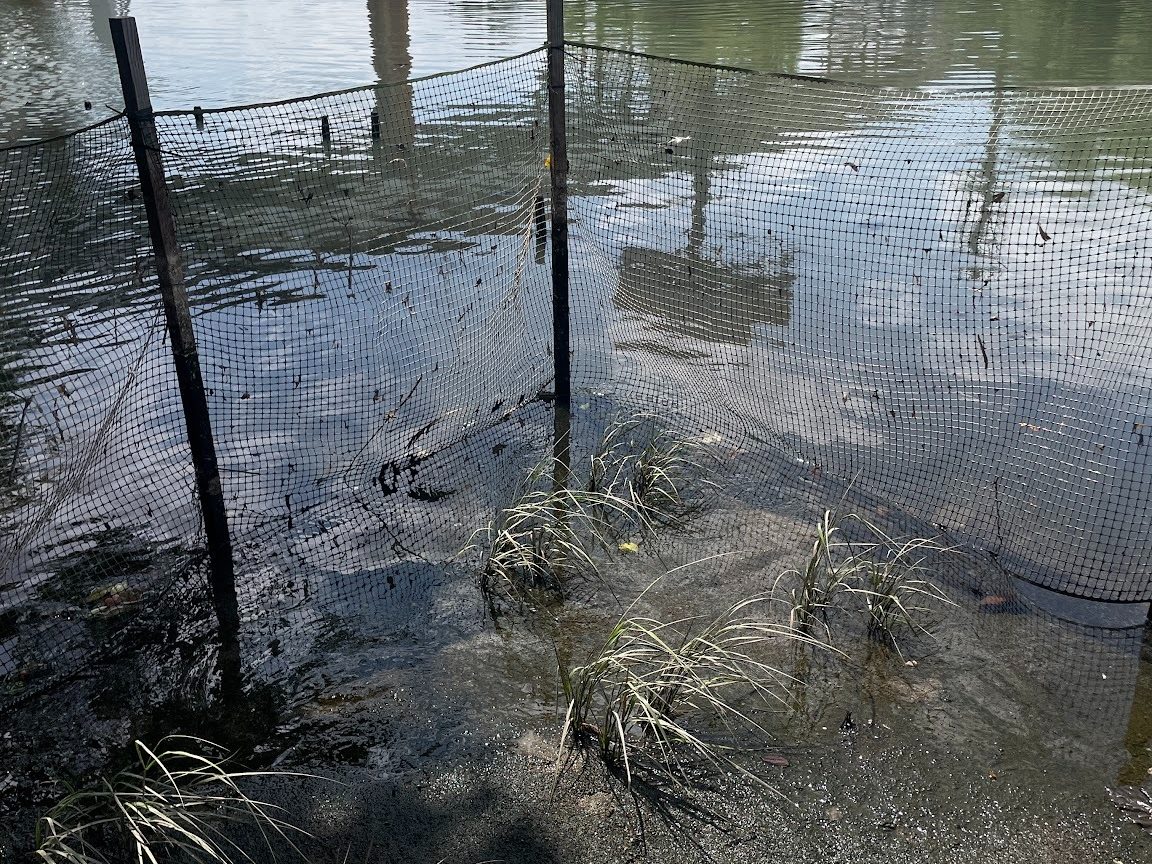
On June 16, the TIDALS 2026 fellows pulled on our muckboots and took our very first visit to Dutch Kills to complete a survey of the salt marsh. Stepping into the fenced-off restoration area, we were careful not to trample on the remaining plugs of saltmarsh cordgrass. The restoration area was created using fresh, uncontaminated sand, and sits flush against the metal bulkhead. While plant cover was sparse, the old plugs of saltmarsh cordgrass were dotted with new growth.
On this first visit, we used rope and metal stakes to create three plots placed along the restoration site. We also set up a trail camera to monitor wildlife visits from geese and other critters. During each visit, we will take pictures of the plots, and record our observations – monitoring plant health, new growth, and the presence of both debris and wildlife at Dutch Kills. After each visit, we’ll be writing a summary of our findings and uploading here as a weekly journal entry. Our hopes are to improve accessibility of what’s happening with progress of this project and inform future maintenance decisions for the marsh.
Despite the challenges the marsh continues to face, we observed various species of wildlife utilizing the space. Multiple species of birds including Canada geese, laughing gulls, and a young mockingbird were spotted. There was plenty of life to see in the Creek itself, like schools of mummichog and even two horseshoe crabs!
Visit #2 : June 24, 2026
After noting the condition of the restoration site last week, TIDALS fellows and NCA staff returned to Dutch Kills on June 24 to complete another replanting session. After carting pallets of marsh grass over the Greenpoint Avenue bridge, we arrived at Dutch Kills ready to replant. Using an auger and drill, we bored clusters of three holes in the sand and placed one plug of marsh grass in each hole. The restoration site is scattered with uprooted plugs from past replantings, where tidal action washed out the plugs before the marsh grass could establish deep roots. To give these plugs the best chance of persisting, we carefully and firmly packed the displaced sediment around the base of the plugs.
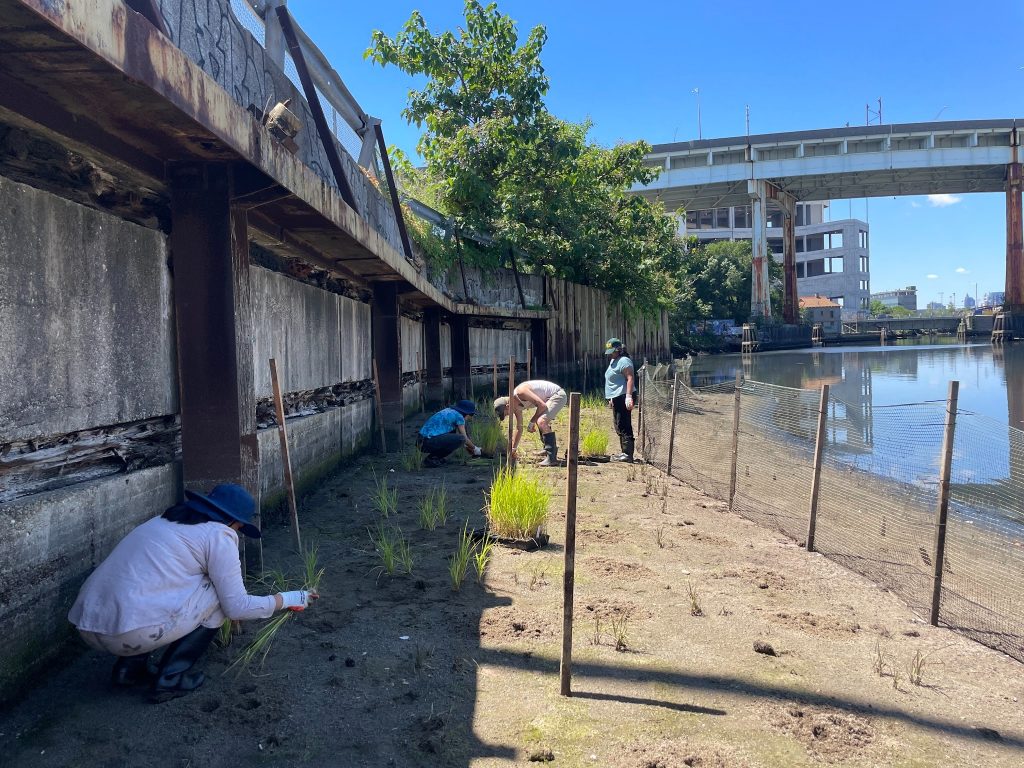
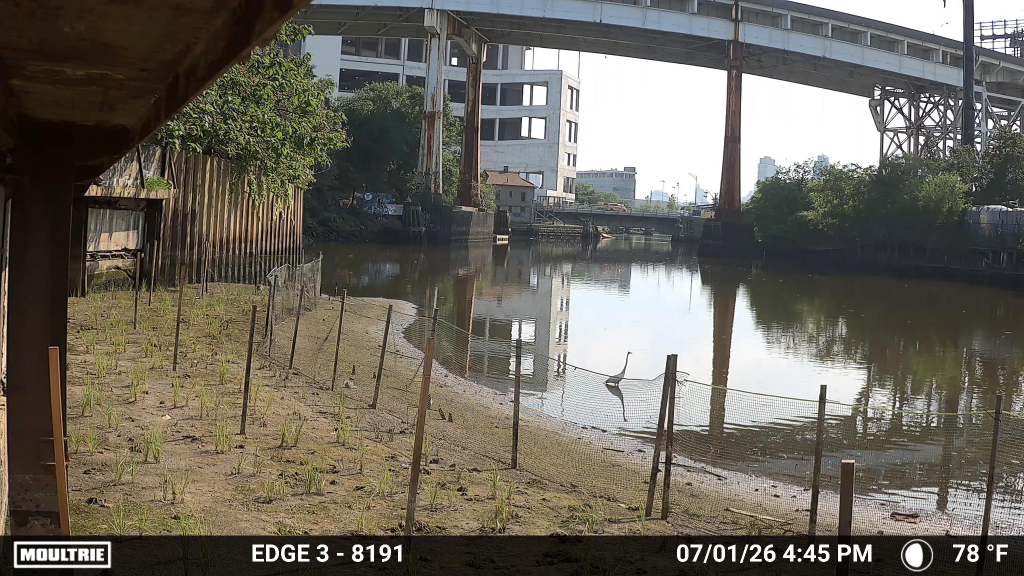
As we planted, we were joined by the familiar wildlife of the creek. Laughing gulls darted above us, and a flock of geese slowly began gathering on the far side of the restoration site. Over the last week, our trail cam has captured photos of tidal action, grazing geese, and even a nighttime video of what appears to be a great blue heron (Ardea herodias) at low tide. Seeing wading birds in the restoration site is a good sign, as it indicates that this restored salt marsh is providing habitat for the wildlife of Newtown Creek. At the same time, the geese presence is a threat to the survival of these new marsh grass plugs. Upon our arrival, we noticed that several geese were already present at the far side of the fencing. As we planted more marsh grass, we noticed even more geese were swimming down the Creek towards the restoration site and the freshly planted grasses. After planting, we completed our survey, taking photos of all the plots and noting their condition. Over the next weeks, we will use our weekly surveys to track grazing by geese and other parameters of marsh health: the number of plugs per plot, estimated percentage of live plugs, new growth, washout, the presence of trash within the plots, and wildlife. The trail camera we set up last week has already captured images of some birds near the restoration site.
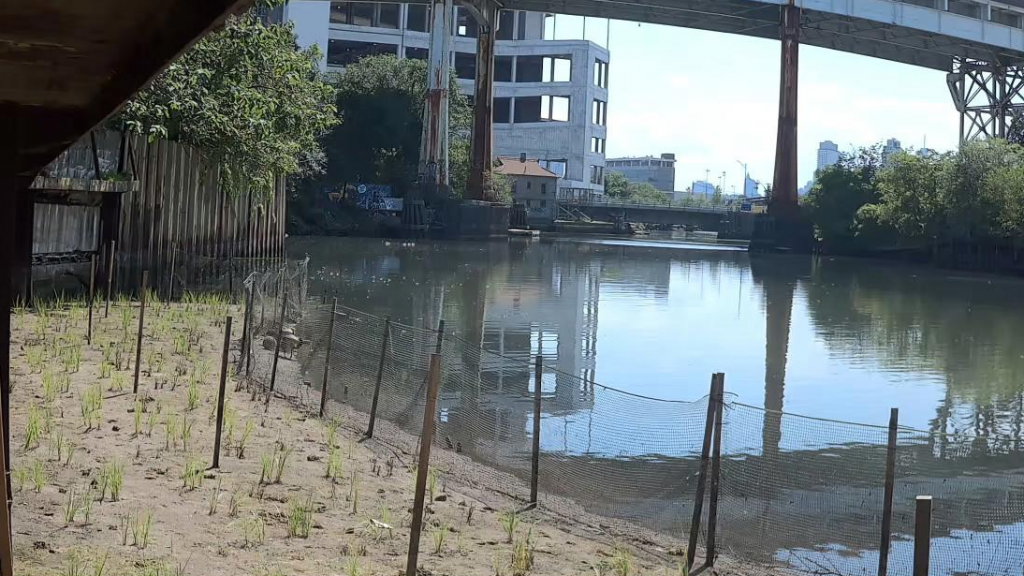
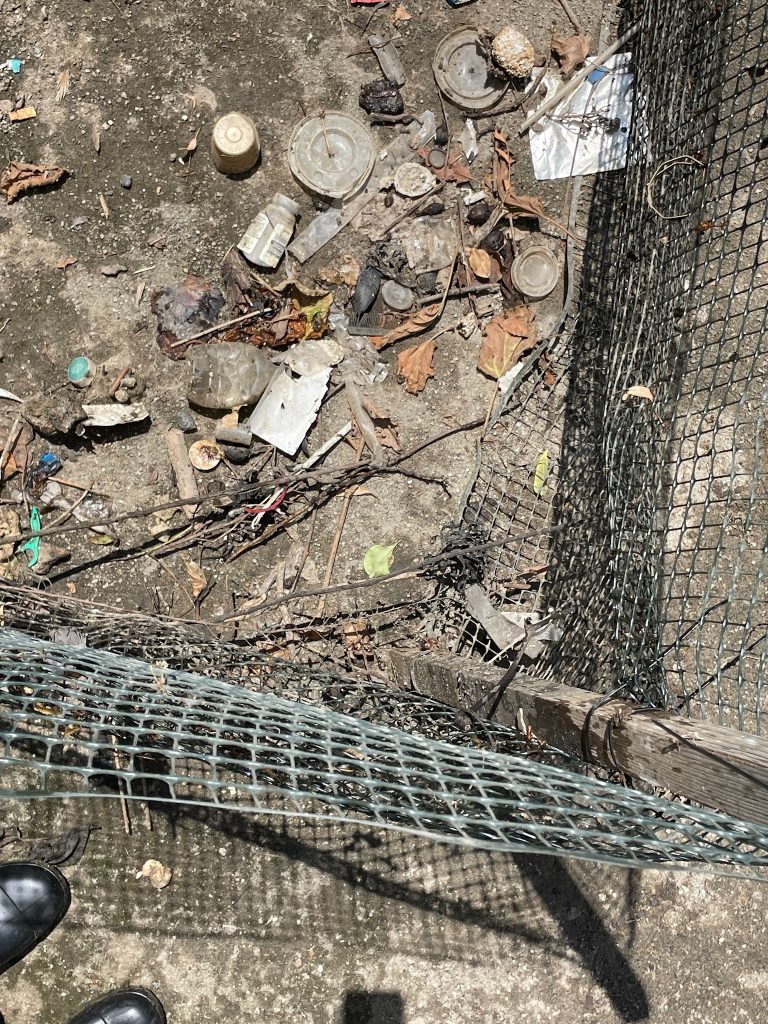
On this visit, we observed no trash inside the plots but a significant amount of waste and debris in other parts of the salt marsh. This waste ranged from pieces of plastic food wrappers to chunks of fatbergs. One particular corner of the fence collected a pile of trash, which mostly consisted of plastic waste. It seems likely that at high tide, the trash and debris floats above the fence but gets trapped when the tide recedes and the water level drops. In the future, we plan on bringing trash bags and grabbers to remove some of the debris tangled up inside the fencing. We are excited to return to the salt marsh next week and see how these new plugs of marsh grass adjust to life in Dutch Kills!
Visit #3 : June 30, 2026
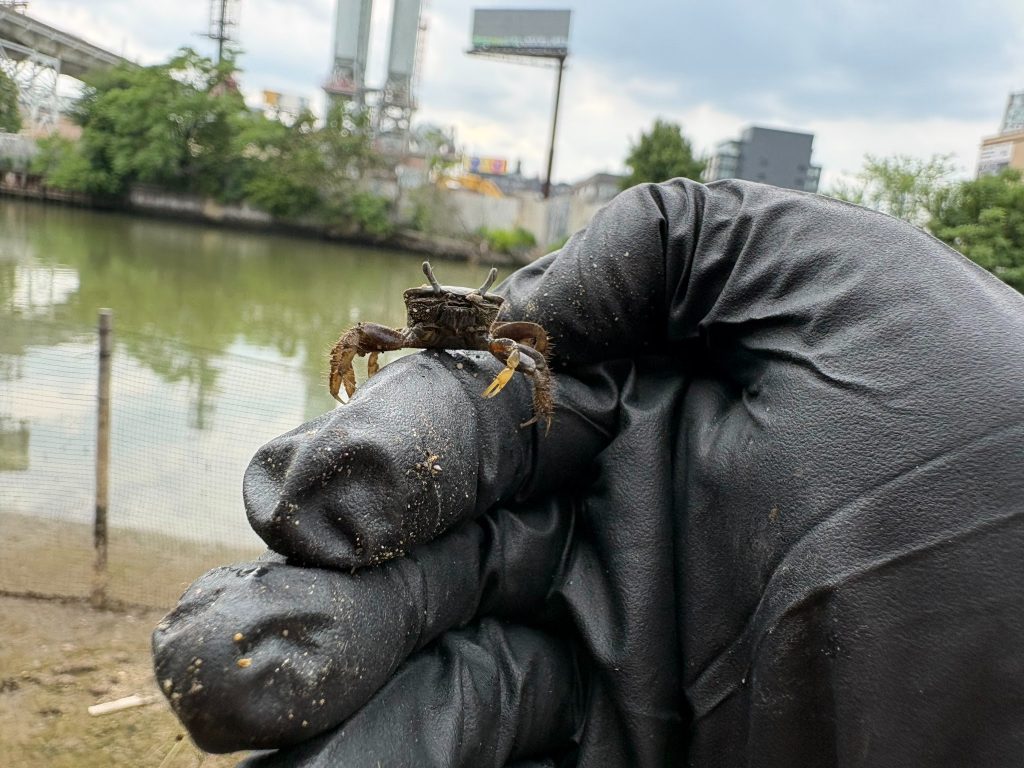
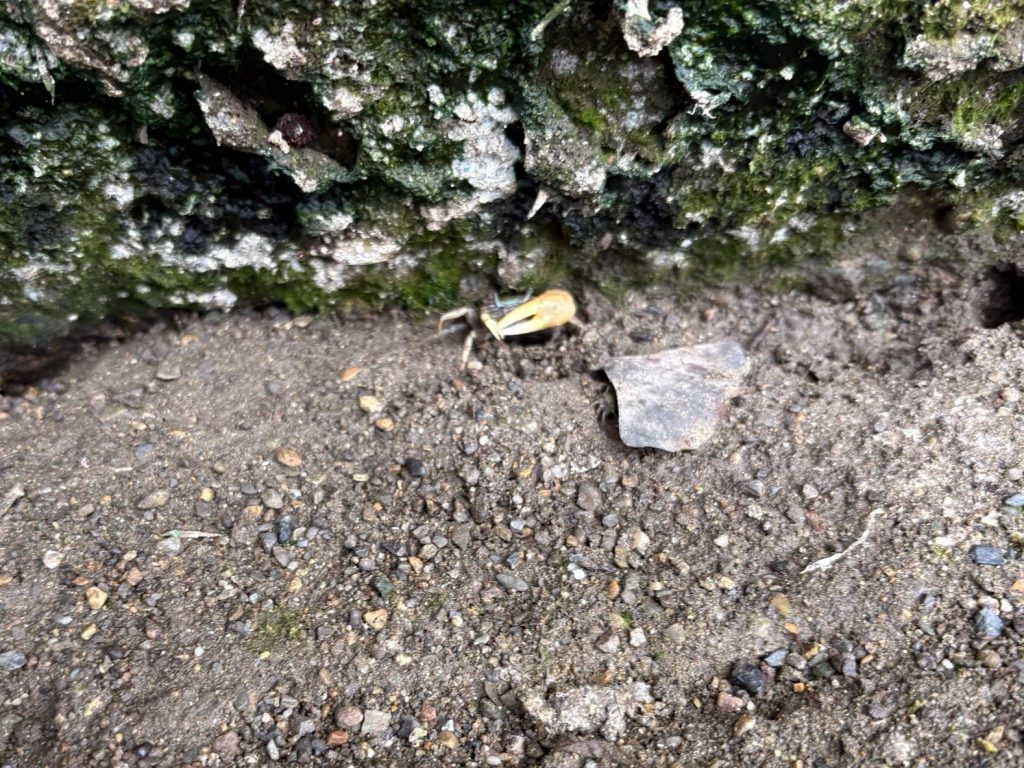
This week’s visit to the salt marsh was our first check in with the new plugs of marsh grass. As we walked towards the restoration site, we saw many mud fiddler crabs (Minuca pugnax) scuttling away from us. During prior visits, we had spotted their burrows, which are marked by small holes in the mudflat. Careful not to step on their homes, we stuck to the rocks as the mud fiddler crabs scuttled away. Mud fiddler crabs live in the mudflats of salt marshes along the Atlantic coast. They can often be found near marsh grasses like S. alterniflora. These crabs are named after the one large claw on males while females possess two claws of equal size. When male crabs move their larger claw, the movement resembles a musician playing the fiddle! The large claws are used in mating rituals to attract females and during displays of aggression towards rival males. After snapping some photographs of these interesting crabs, we began conducting our usual marsh survey.
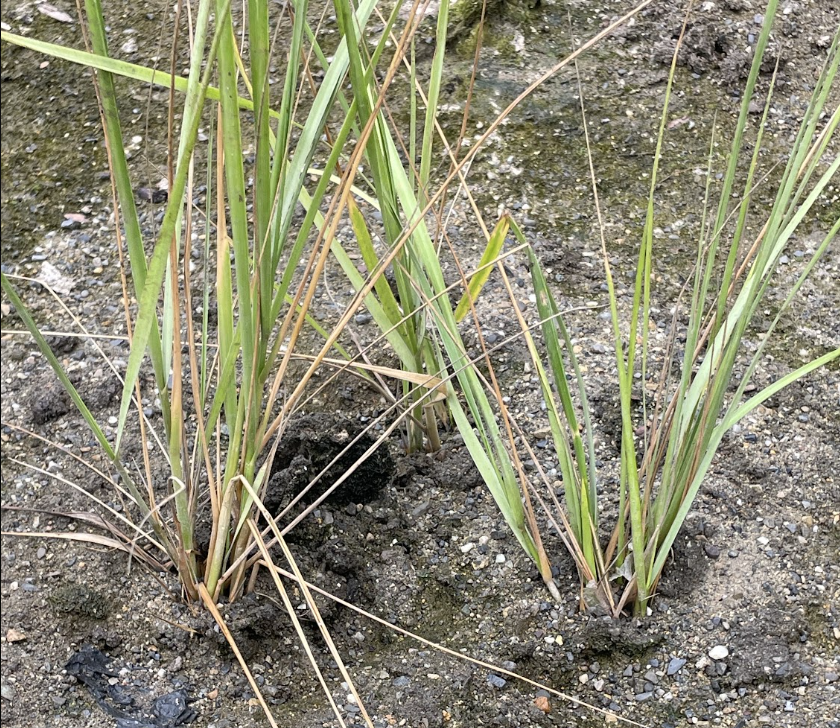
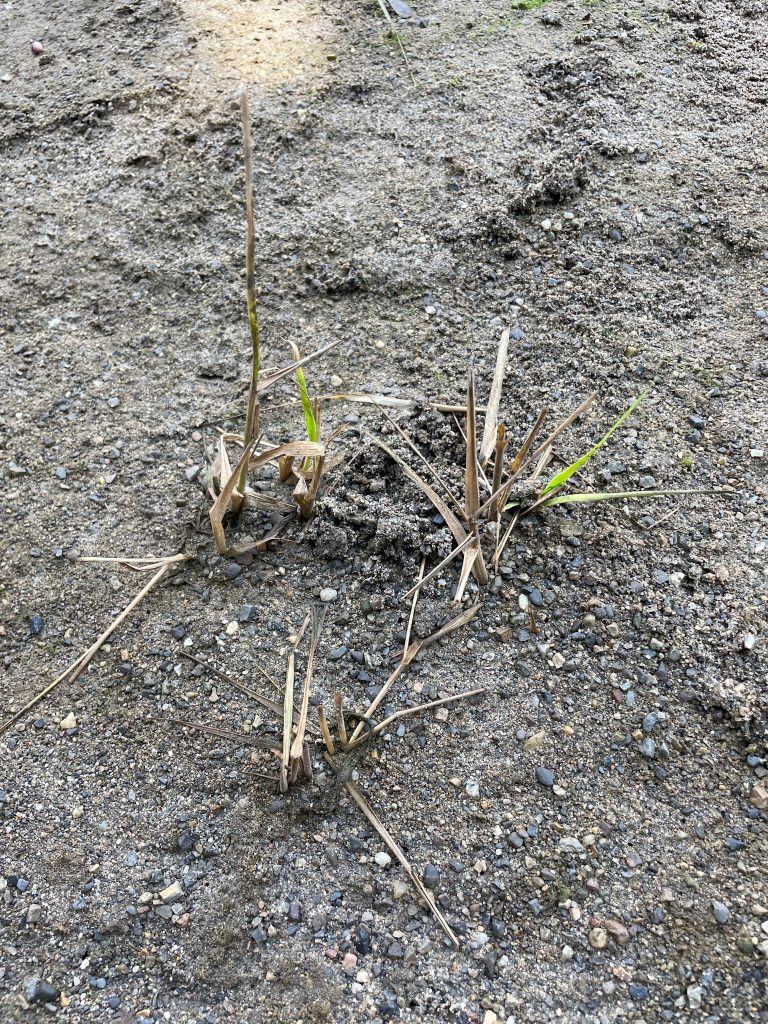
Looking closer at the newly planted marsh grasses, we observed that many of the plugs were noticeably more yellow than when they were freshly planted. Some of the plugs also possessed blades that were drying out from the tips downwards. The yellowing was present across the entire restoration site. In comparison to new plugs, older marsh grasses were extremely dried out and felt more like straw when touched. However, as we walked further down the restoration site, we noted that the marsh grasses on the far side of the salt marsh seemed more vibrant, with fewer yellowed and dried out blades in comparison to the plugs near the entrance. We observed no washout from the new plantings, but we did see older plugs uprooted from the sediment.
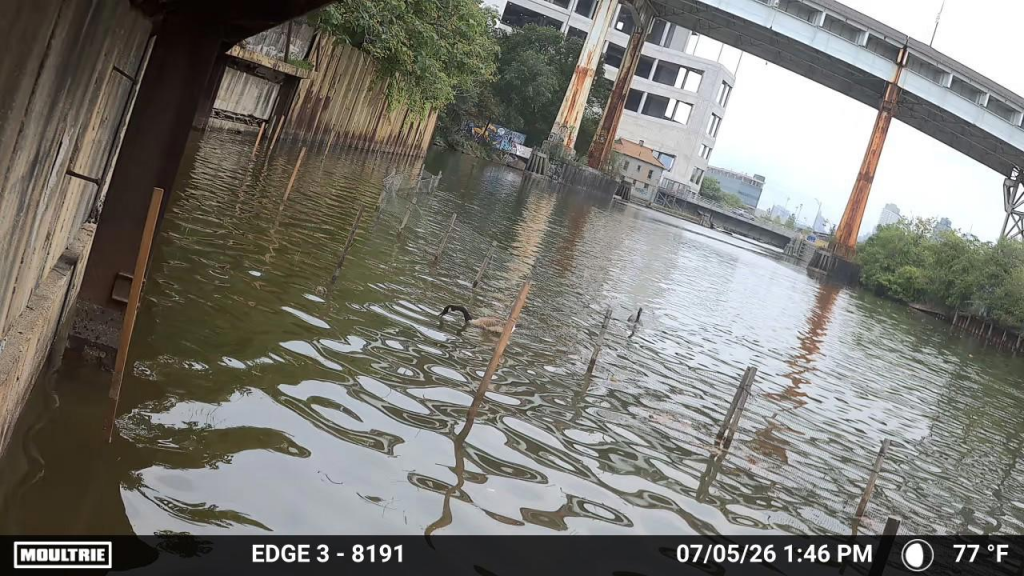
After checking the trail camera, we noticed over the past week, the restoration site received a few bird visitors! Another wading bird, also likely a great blue heron, was captured just outside the fencing of the salt marsh. At low tide, this bird was likely stalking through the shallows in search of prey. While the wading bird was an exciting find, the trail camera also snapped footage of a couple Canada geese hanging out around the restoration site. One photograph even captured clear evidence of a goose nibbling on some saltmarsh cordgrass! When doing our marsh surveys, looking at the tips of the saltmarsh cordgrass helps us detect grazing by wildlife. If the tips are flat instead of pointy, it’s a sign that geese have been feeding on the plugs. In the surveys we have conducted so far, we have observed grazing in all three plots. Observations of past plantings have also noted that geese sometimes stomp on top of the plugs, uprooting them and contributing to plug washout.
Next week, we will continue to monitor how factors like grazing and washout are affecting the new plugs. We will also make sure to take note of the yellowing of the plugs to assess the level of concern. Hopefully these young saltmarsh cordgrasses are beginning to anchor themselves and take root!
Visit #4 : July 9, 2026
On this visit, we made sure to return to the restoration site with trash grabbers and bags. Upon arrival, we observed a significant amount of litter around the restoration site. With our trash grabbers, we removed all waste and debris from inside and around the fencing. The majority of this trash was plastic material, like discarded food wrappers and used plastic bags. After cleaning up the site, we proceeded with our marsh survey, which revealed several interesting changes to the salt marsh.
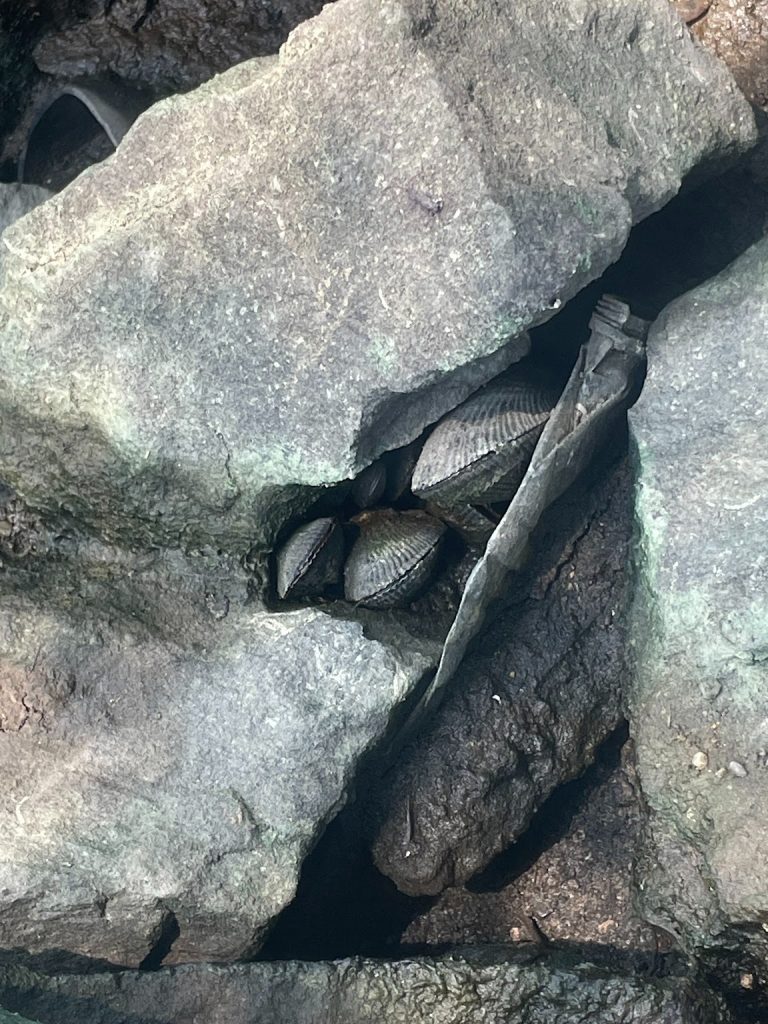
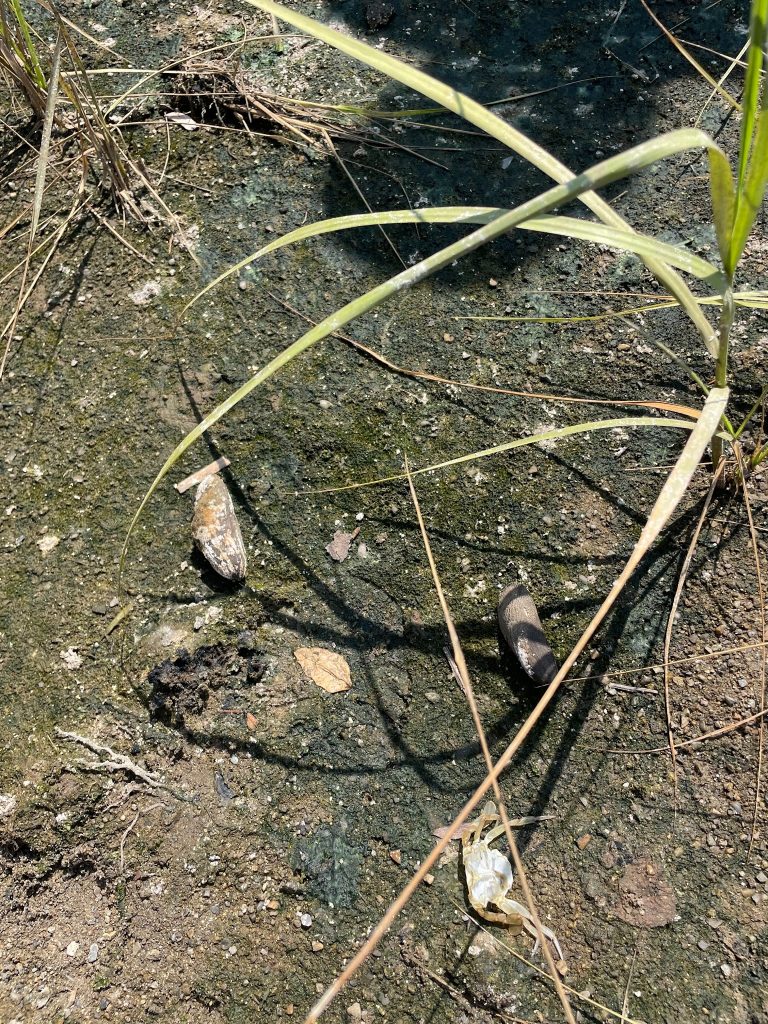
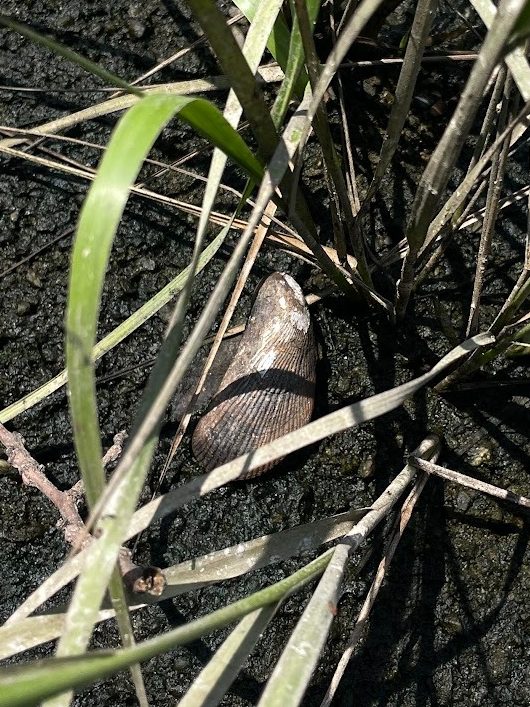
While conducting our survey, we found two ribbed mussels (Geukensia demissa) near some saltmarsh cordgrasses. Ribbed mussels are powerful filter feeders native to the Atlantic coast. Their strong filtration abilities make them important bioremediators, which means that they can help clean up contaminated environments like Newtown Creek. These ribbed mussels likely washed into the restoration site during high tide, just like the debris that we removed. Ribbed mussels and saltmarsh cordgrass also have a known mutualistic relationship that helps stabilize and support salt marsh ecosystem growth. In natural salt marshes, ribbed mussels can be found buried in the mud and clinging to the stems of saltmarsh cordgrasses. However at Dutch Kills, we mostly find ribbed mussels in the cracks between rocks near the shoreline.
On each of the past four visits to Dutch Kills, we noticed that Canada geese tend to cluster together on a slip of shoreline on the far side of the restoration site. While walking through the site, we also observed that the plugs close to this corner tend to exhibit signs of heavy grazing, likely by the same geese. In this area, the geese have grazed the plugs nearly down to the sediment. Many of the plugs in this specific corner of the restoration site had flat tips and were also very dried out. In comparison, the other plugs in the salt marsh were whole and mostly untouched by grazing.
During last week’s visit, we noted that some of the plugs were turning yellow and drying out. Today, we didn’t observe any significant increase in yellowed, dry, or grazed down plugs. It’s possible that this discoloration was the result of heat stress, since NYC has been facing extreme heat. For now, the majority of the marsh seems mostly unaffected, and when we return to Dutch Kills next week, we will look out for signs of increased grazing and discoloration across all the plugs.
Visit #5 : July 14, 2026
Checking in with Dutch Kills revealed no major changes to the restoration site. During the past two visits, we had noticed a significant amount of yellowing happening to some of the plugs. Fortunately, we observed no marked spread of this yellowing to any new plugs. We also did not notice any washout from the new plugs. Five weeks out from our more recent replanting, this is a good sign that the saltmarsh cordgrasses are settling into the sediment of the restoration site.
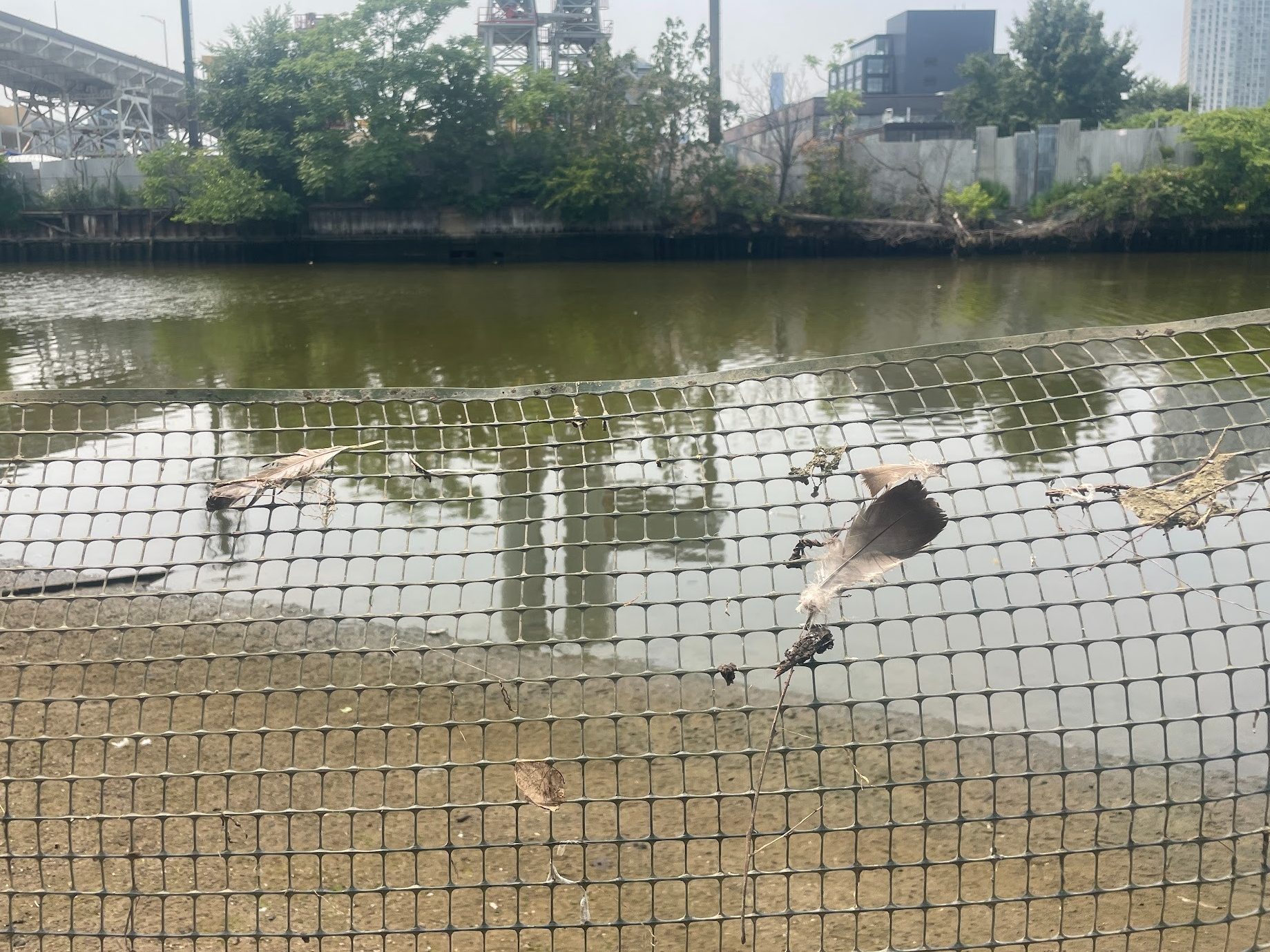
Most notably, we observed no birds either in or around the restoration site during the duration of our marsh survey. This was a huge surprise, since we have observed birds near the salt marsh on all four of our previous trips to the marsh. Usually we see Northern mockingbirds, laughing gulls, mallard ducks, and plenty of Canada geese, but on this trip, they were all absent from the Creek. However, we still noticed many geese feathers lying on top of the sediment and some even stuck in the fence netting around the site, which indicates that the geese are still flocking to the salt marsh and making their way into the site.
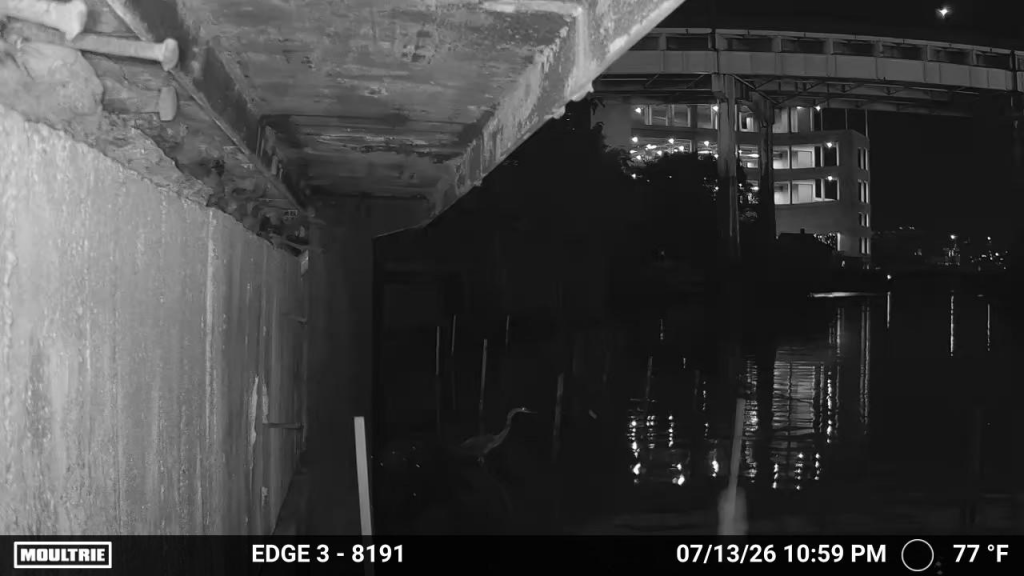
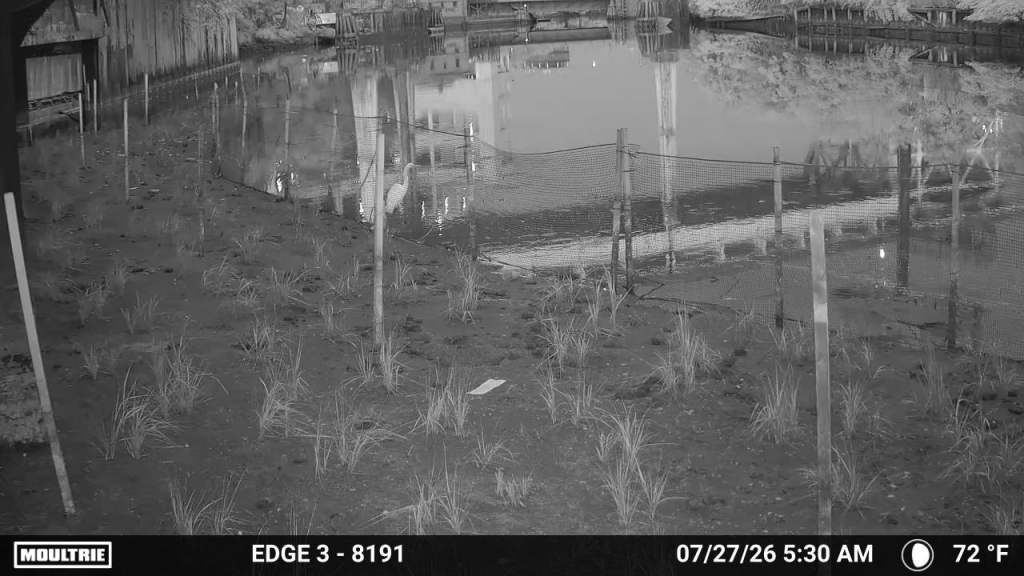
While we didn’t see any birds during our marsh survey, our trail camera captured its third photo of a great blue heron walking around the site! Though herons can hunt by day or night, the herons captured on our trail cameras seem to prefer dusk and late nights for their strolls around the salt marsh.
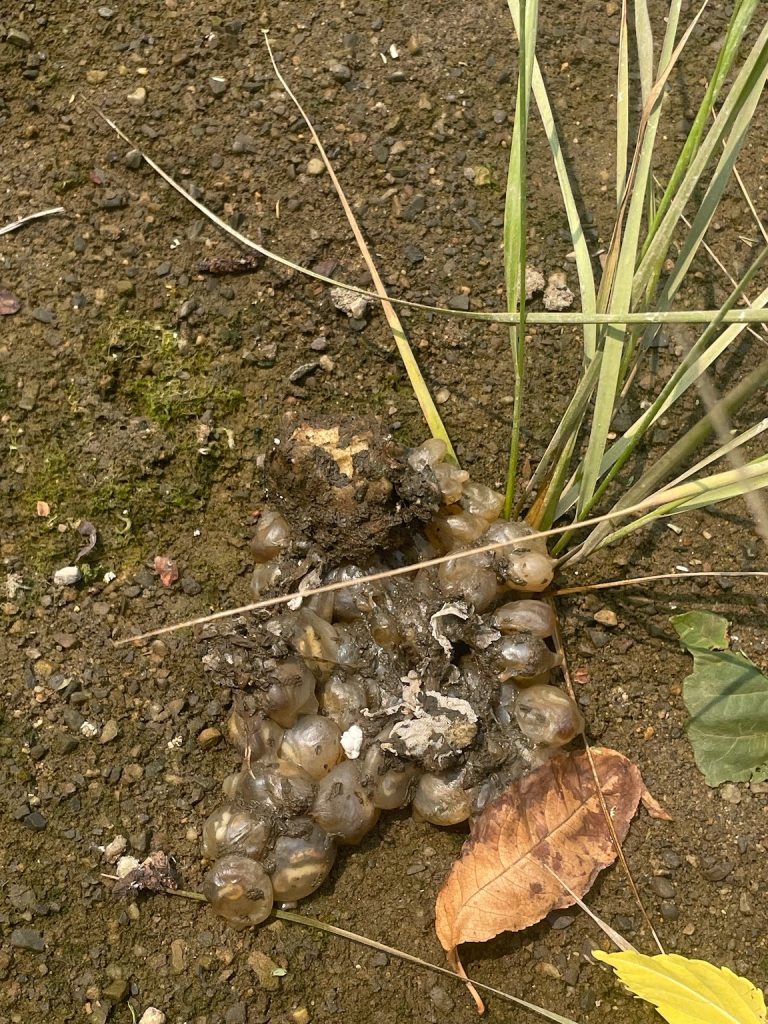
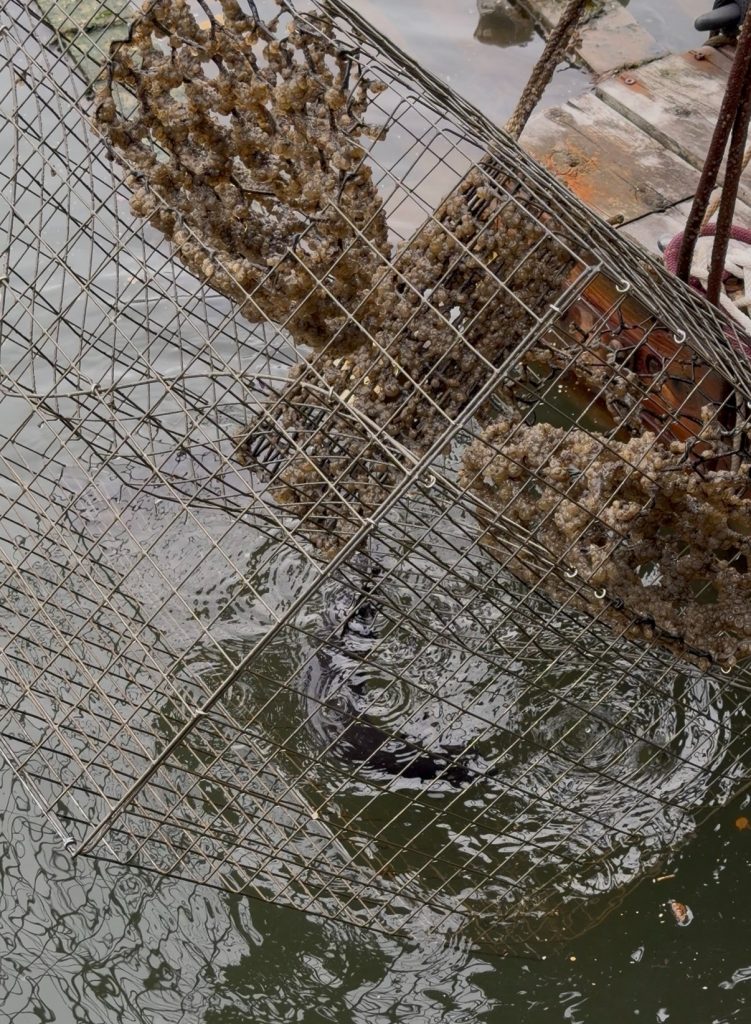
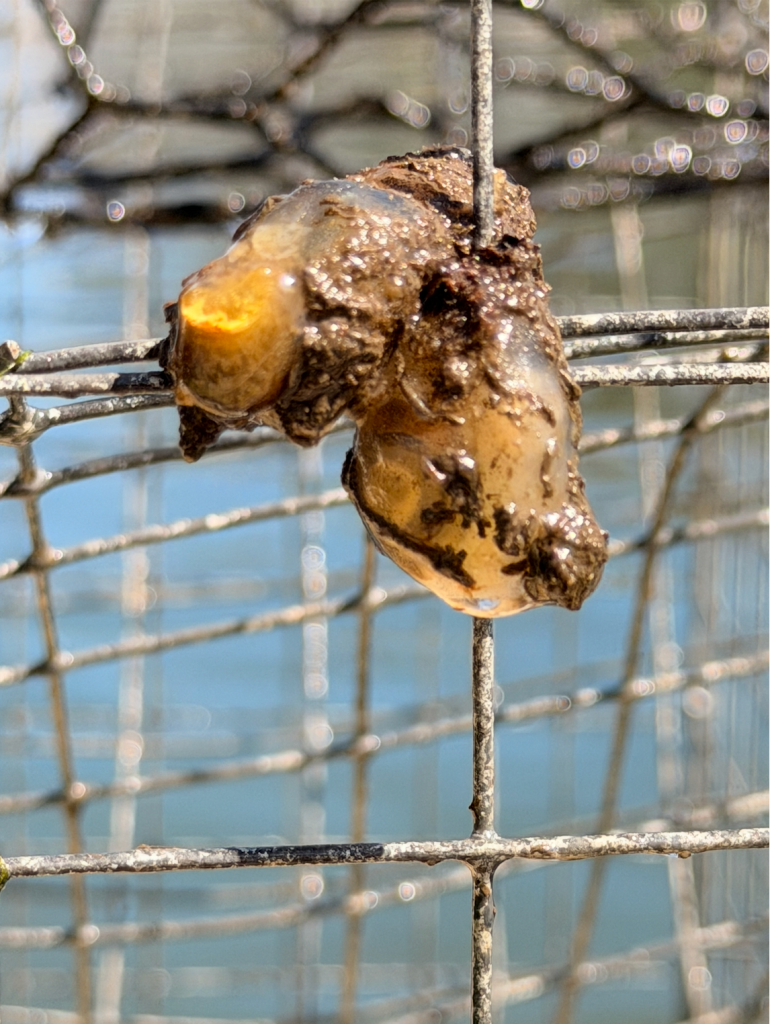
Walking through the restoration site, we also spotted a few clumps of sea squirts washed ashore. Sea squirts, or tunicates, are marine invertebrates found in many coastal habitats. The most commonly found species of sea squirt on the East Coast is Molgula manhattensis, and we have seen thousands of them beneath our living docks. Sea squirts are also known to cling to the undersides of boats and piers. This summer, we have encountered many sea squirts while conducting fish surveys in the Creek, as the sea squirts tend to cluster on the wire mesh frame of our fish traps. The buildup of organisms like sea squirts is also called fouling. For our fish traps, the fouling becomes so dense that we have to periodically scrub the traps clean. Interestingly, we have found that our fish traps are less successful when there is heavy fouling.
Like the Atlantic ribbed mussel, sea squirts are also filter feeders, drawing water in through their siphons, filtering it in their digestive tract, and expelling water through other siphons. Plugs of saltmarsh cordgrass are not the typical habitat for sea squirts, which were likely washed in by the tide, but it was still interesting to see some different wildlife at Dutch Kills.
Visit #6 : July 29, 2026
Our sixth trip to Dutch Kills comes one week late, as we spent most of last week preparing for some community programming. After missing our weekly marsh survey, we were excited to get back to the salt marsh and check on its progress! Overall, the health of the marsh and grasses seems decent. Unfortunately, while conducting our marsh surveys, we discovered a washed out plug from our recent replanting at Dutch Kills. The restoration site is scattered with older washed out plugs from past replantings, but this was the first newly replanted plug to be found uprooted.
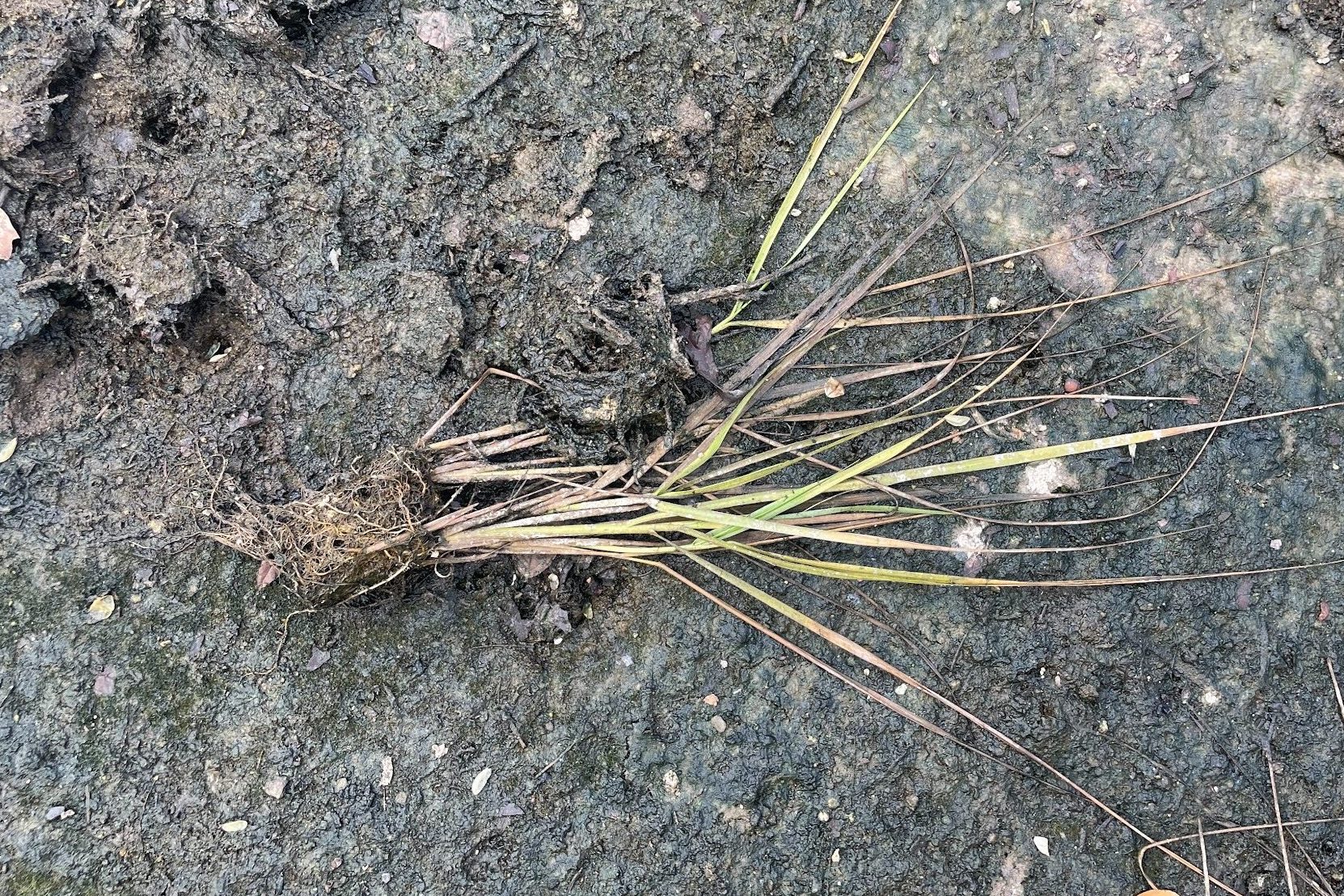
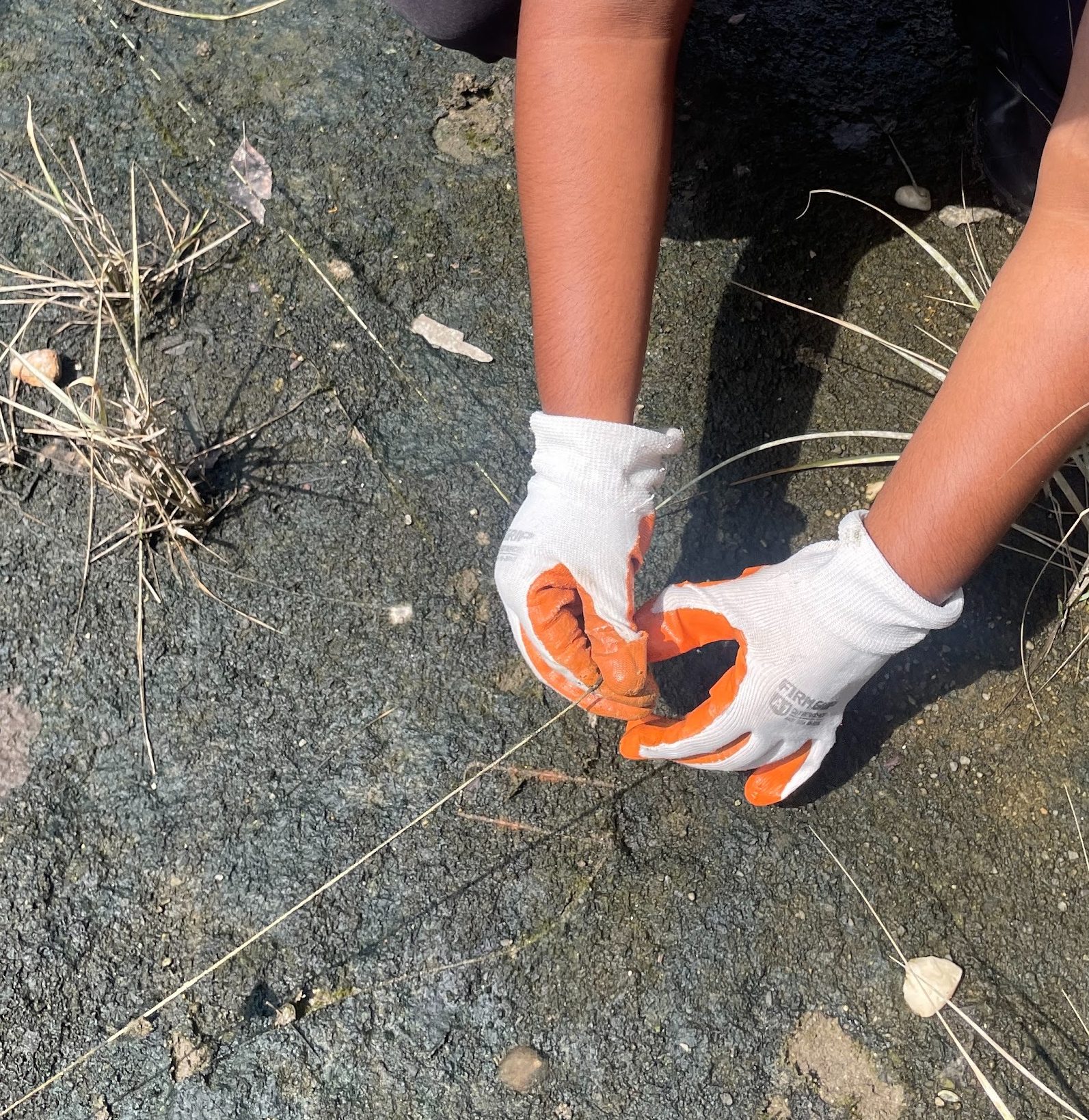
This washout was likely the result of repeated tidal action displacing loose sediment over time. As we scanned the ground, we noticed areas where further washout might occur. These areas were large indentations in the ground near clusters of saltmarsh cordgrasses where sediment was missing. While unfortunate, it is still a good sign that the rest of the marsh seems well-rooted seven weeks after the replanting.
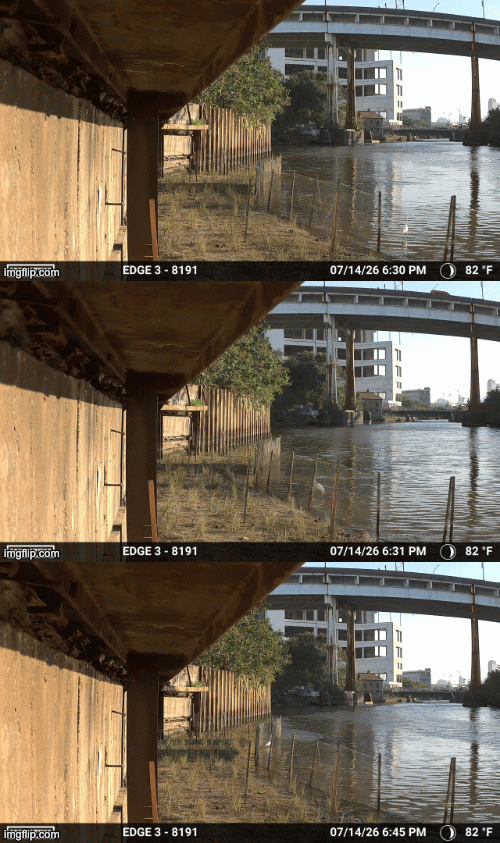
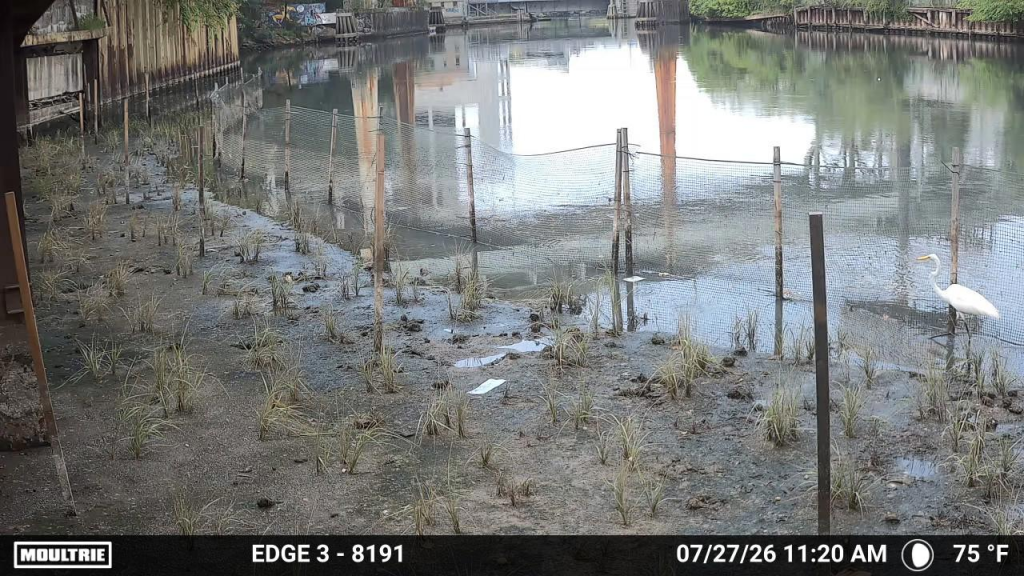
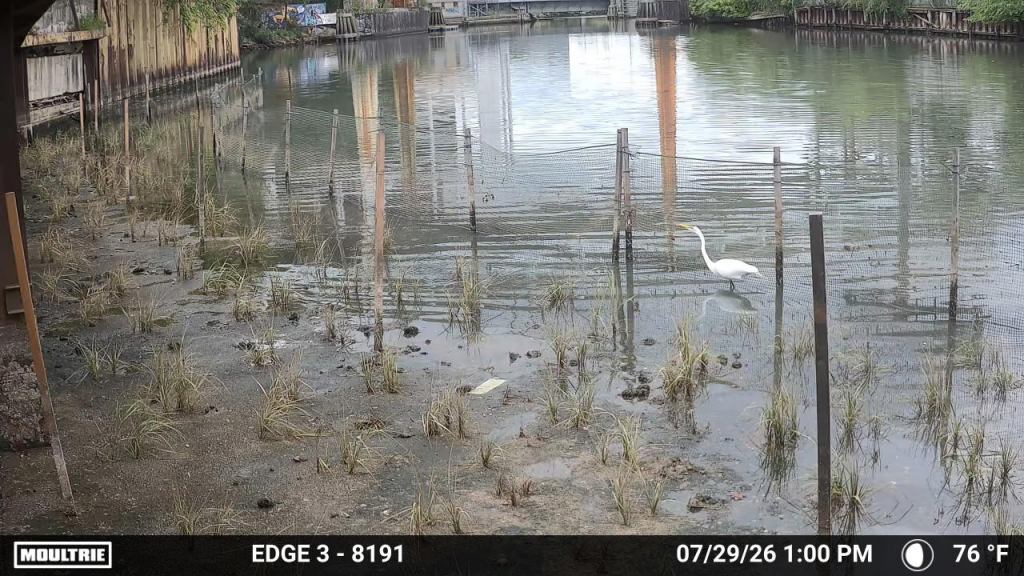
While looking through all the trail camera photos from the past two weeks, we found some really interesting sights! From around 6:30 PM to 6:45 PM, our trail camera detected a great egret (Ardea alba) wading just outside the boundary of the restoration site. The camera captured three great photos of this great egret as it moved down the site before it either flew away or continued to wade further up into Newtown Creek. Since this is our third trail camera sighting of a wading bird, it seems safe to say that the Dutch Kills salt marsh is providing habitat for small fish and aquatic invertebrates that in turn attract all kinds of wildlife. Like some other wading birds, great egrets hunt by active stalking; they stand still until they are ready to quickly jab their beaks into the water and catch prey. It would be amazing to see our trail camera record a successful hunting egret at Dutch Kills!
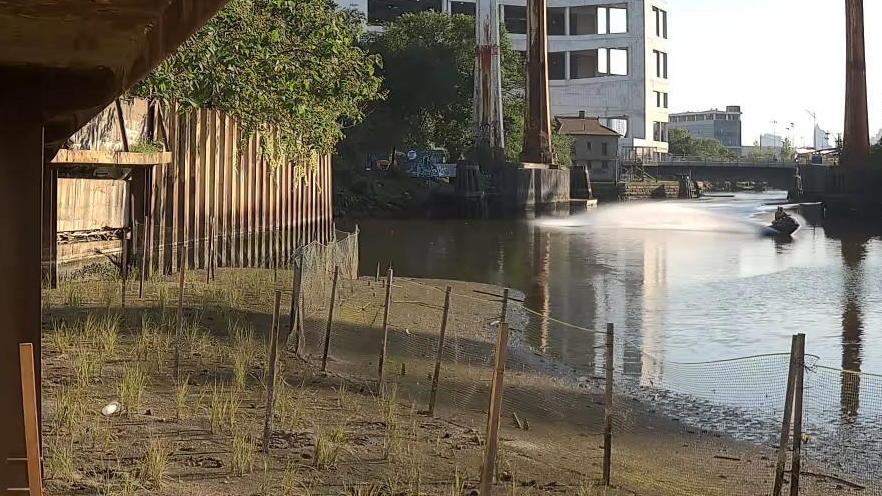
A couple days later, the trail camera snapped a photo of what appears to be someone on a jet ski! They appeared to be heading down towards the mouth of the Creek, where it joins the East River between Greenpoint and Long Island City. Aside from two kayakers the trail camera spotted a few weeks ago, this jet ski is only the second vessel we have ever seen at Dutch Kills. Since the passage of commercial maritime vessels are limited in Dutch Kills, it makes sense that we have only seen smaller watercraft.
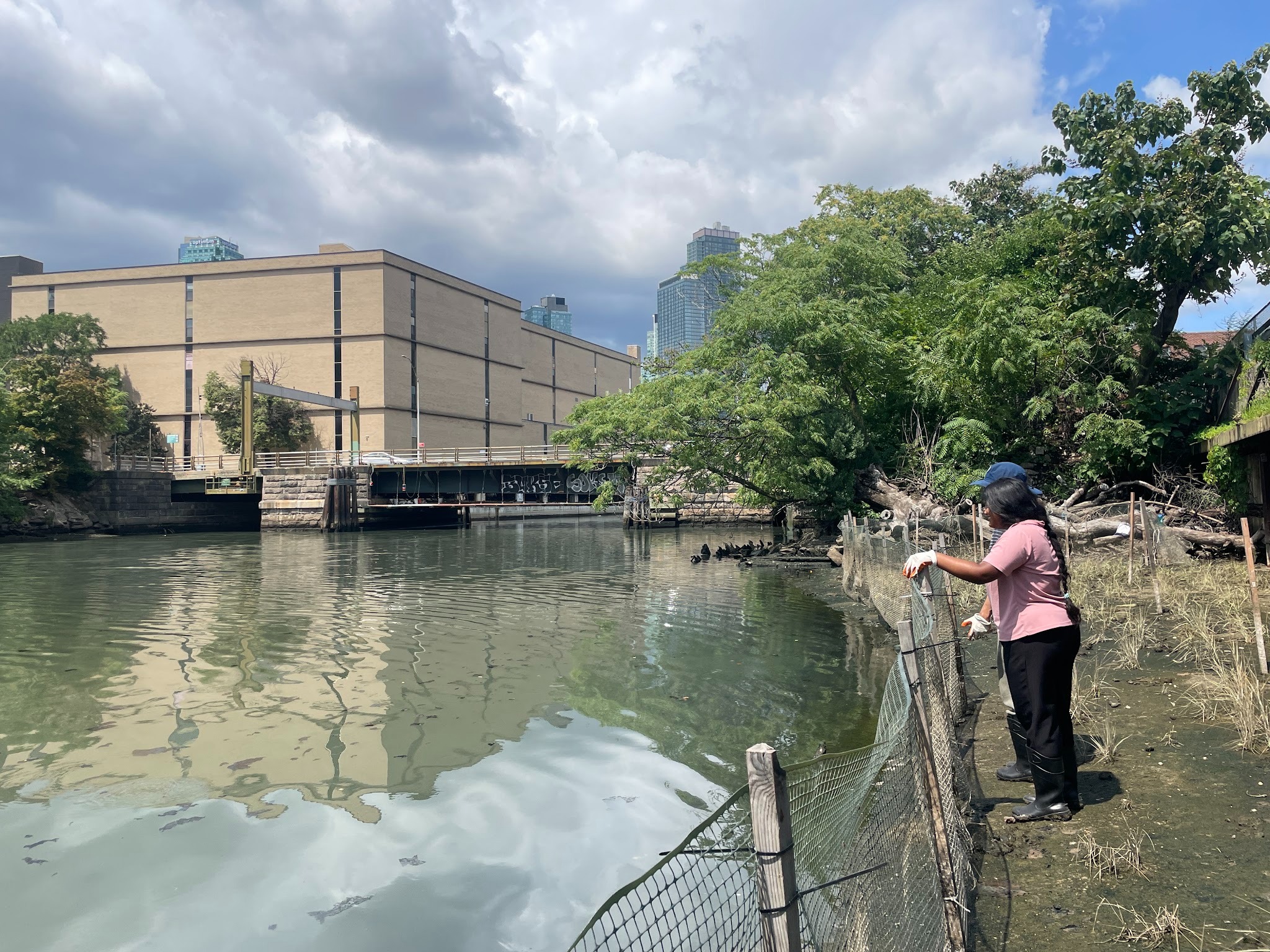
Today, the tide was still retreating when we arrived at Dutch Kills.The water level was low enough for us to step onto the site and the receding water gave us the opportunity to see some schooling mummichog right on the other side of the fencing! The water was just clear enough to let us catch glimpses of young mummichog as they darted through the water.
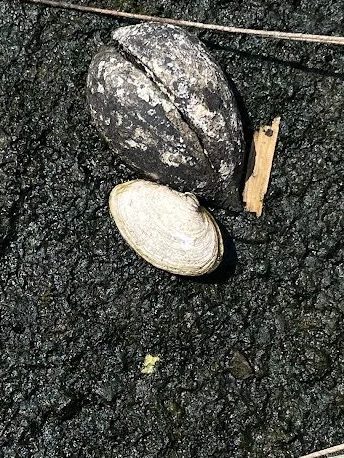
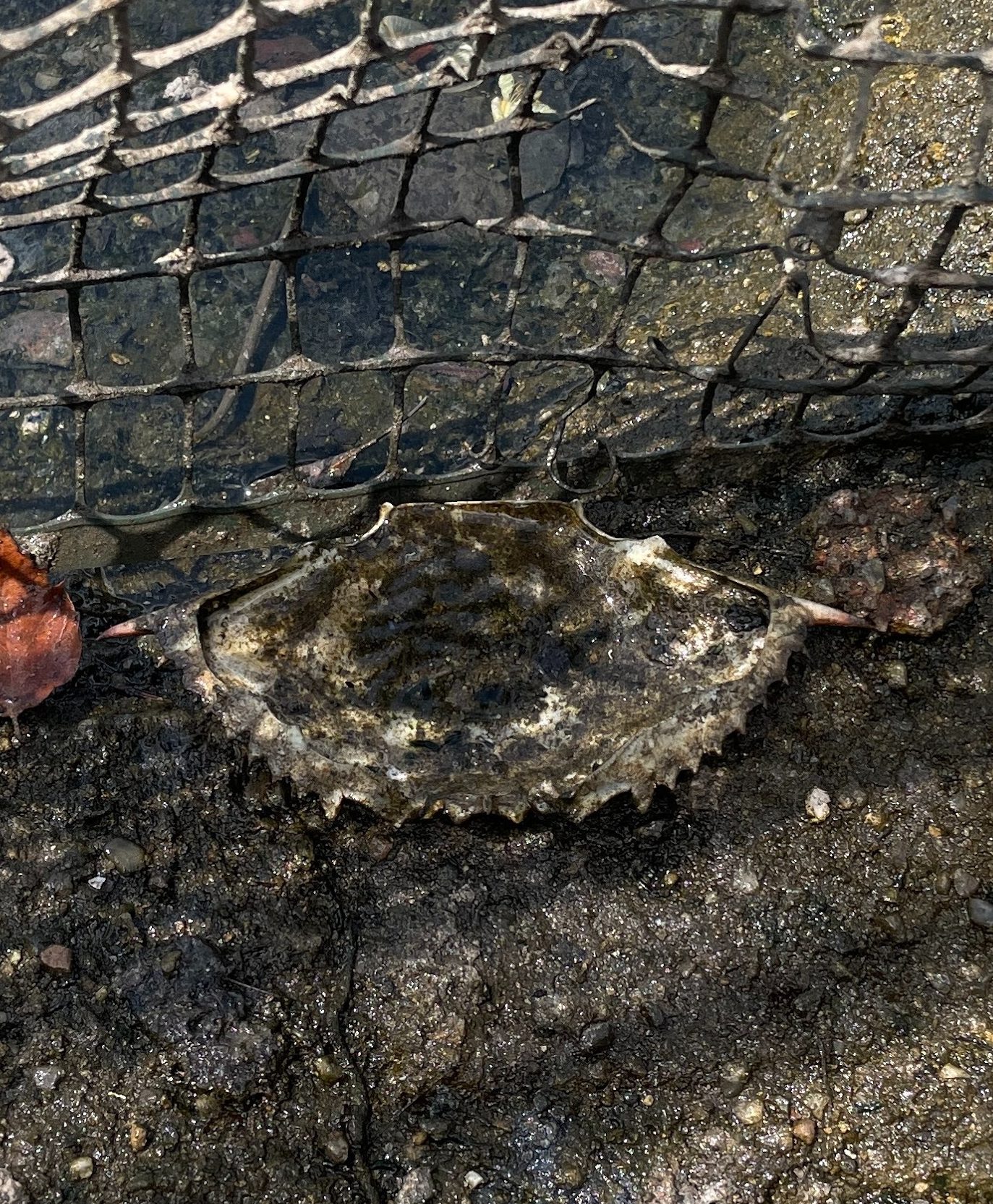
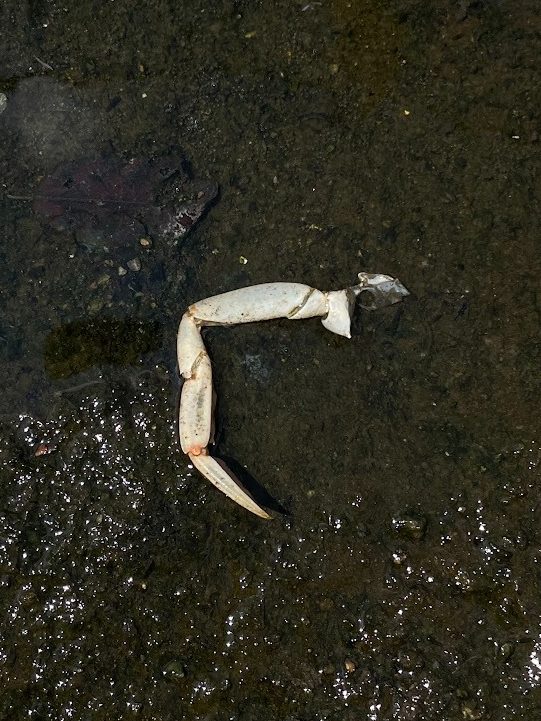
We also found multiple crustaceans and mollusks! While an empty carapace and leg was the only evidence of a blue crab, we found complete shells of ribbed mussels and a soft-shell clam. On our next marsh survey, we will make sure to search for worsening signs of washout around the base of the plugs. In the past few weeks, the restoration site has experienced a wide range of weather, from extreme heat to heavy rainfall. Still, the majority of the saltmarsh cordgrasses remain rooted in the sediment, and new growth continues to pop up across the site.
Visit #7 : August 12, 2026
We took a break from marsh surveys and skipped a week, making our final visit to Dutch Kills during the last week of the TIDALS fellowship. Since our previous trip to the site, we have run into some difficulties with the trail camera. After changing the batteries and readjusting the angle, we were able to continue tracking tidal action and wildlife presence at the Dutch Kills restoration site. Once again, our trail camera caught several photos of a great egret roaming the salt marsh.
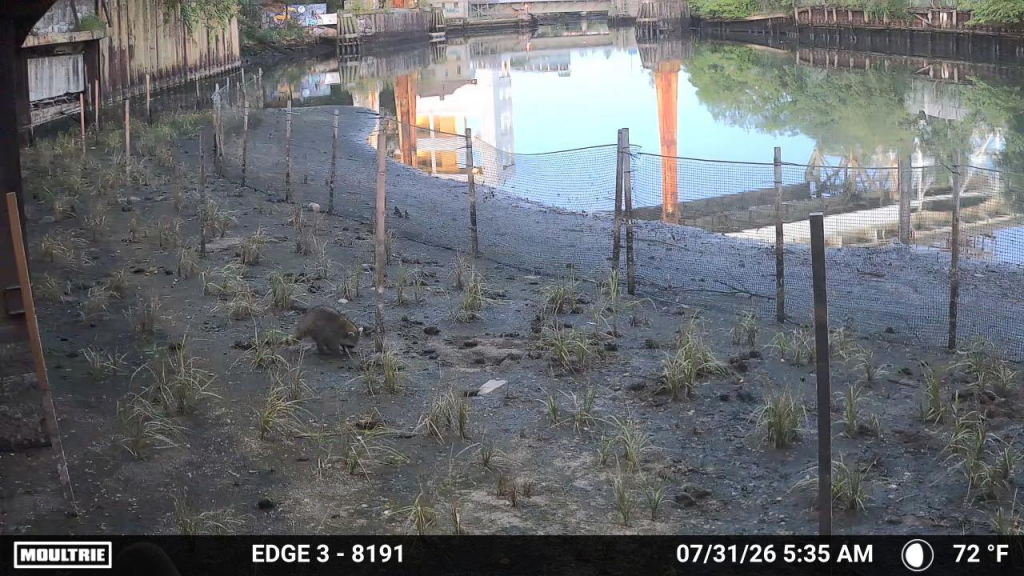
On top of this bird spotting, we were thrilled to see that our trail camera also captured snapshots of some furred creatures! A small family of raccoons (Procyon lotor) were seen roaming the salt marsh at low tide during the early hours of the morning. Raccoons are one of the most common animals in New York, and are highly adaptable, allowing them to thrive in urban centers. Raccoons are very opportunistic feeders with a diet ranging from fruits and nuts, to insects, to water animals. In the photos our trail camera captured, the raccoons appear to be focusing on the sediment of the salt marsh, likely searching for marine invertebrates. Raccoons are known to feed on mud fiddler crabs, digging through soft mud with their dextrous paws. It seems likely that our raccoon visitors were searching for the mud fiddler crabs that we commonly see burrowing around Dutch Kills.
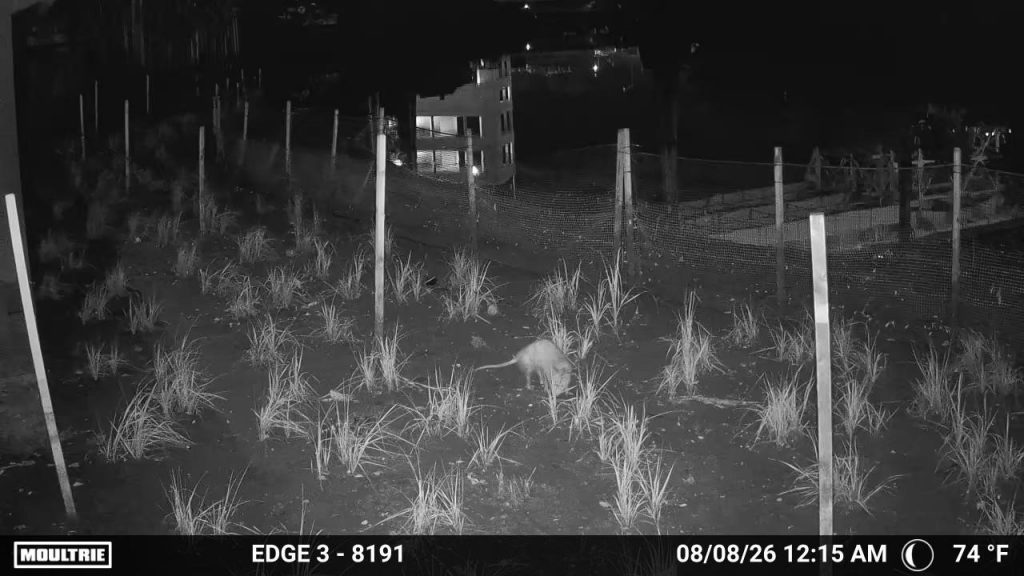
In addition to the raccoon family, our trail camera has also snapped a photo of a solitary Virginia opossum (Didelphis virginiana) roaming among some saltmarsh cordgrass. Virginia opossums are the only native marsupial in North America, and despite the name, can be found all along the east coast. They are native to New York, and are omnivores with very diverse diets. Their numbers are the most numerous in habitats adjacent to sources of water, which might explain why this Virginia opossum visited Dutch Kills. Opposums are typically solitary, leaving their shelter under the cover of night to scavenge for food. Dutch Kills appears to be providing a hunting ground for many creatures, from wading birds to nocturnal mammals!
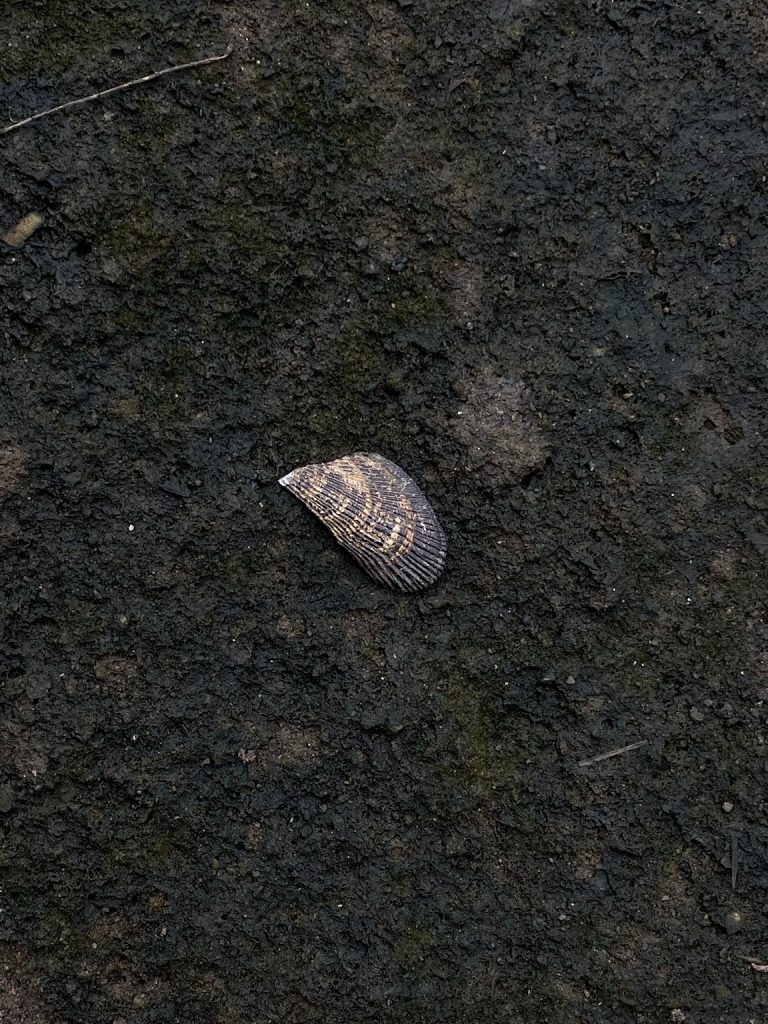
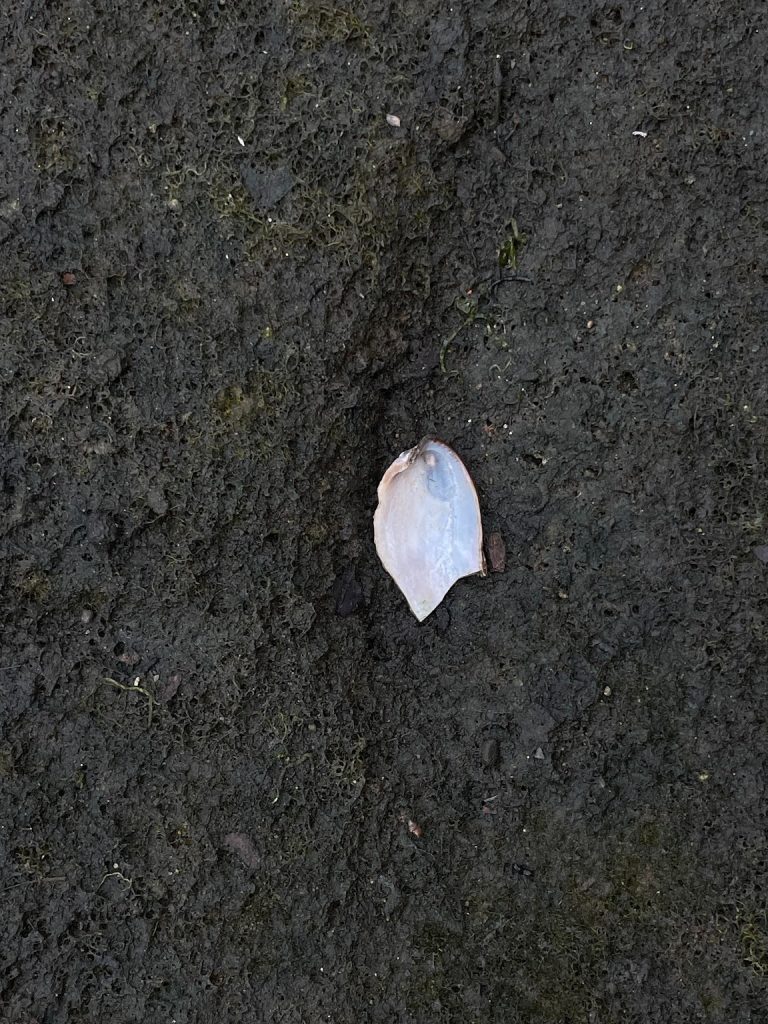
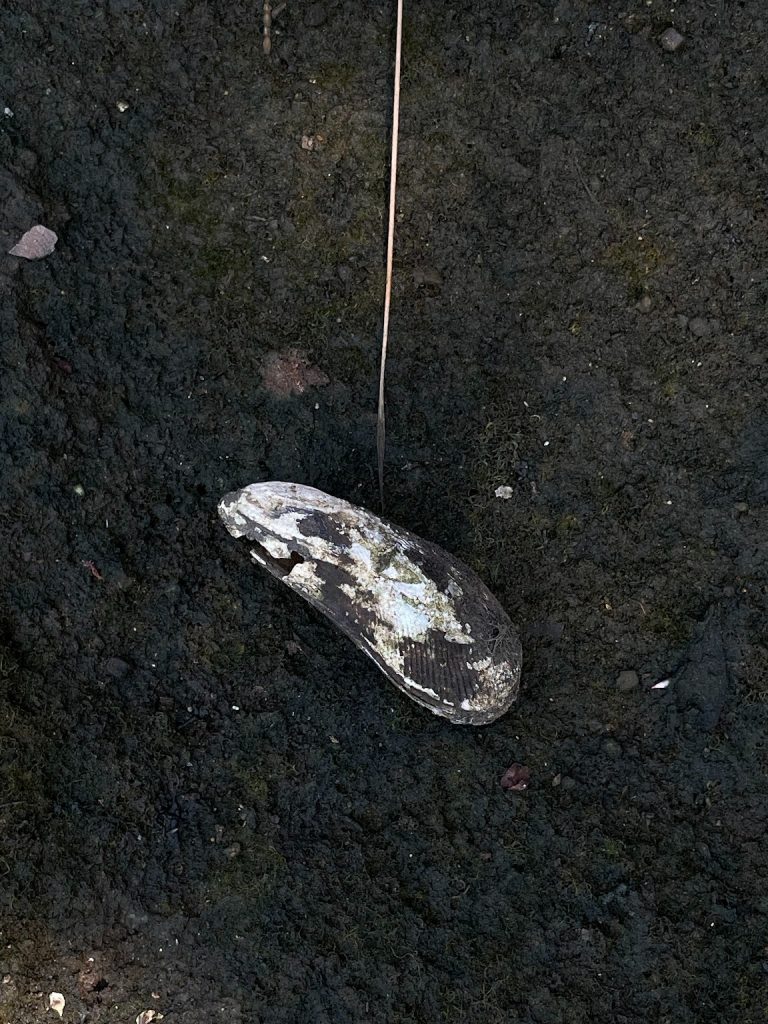
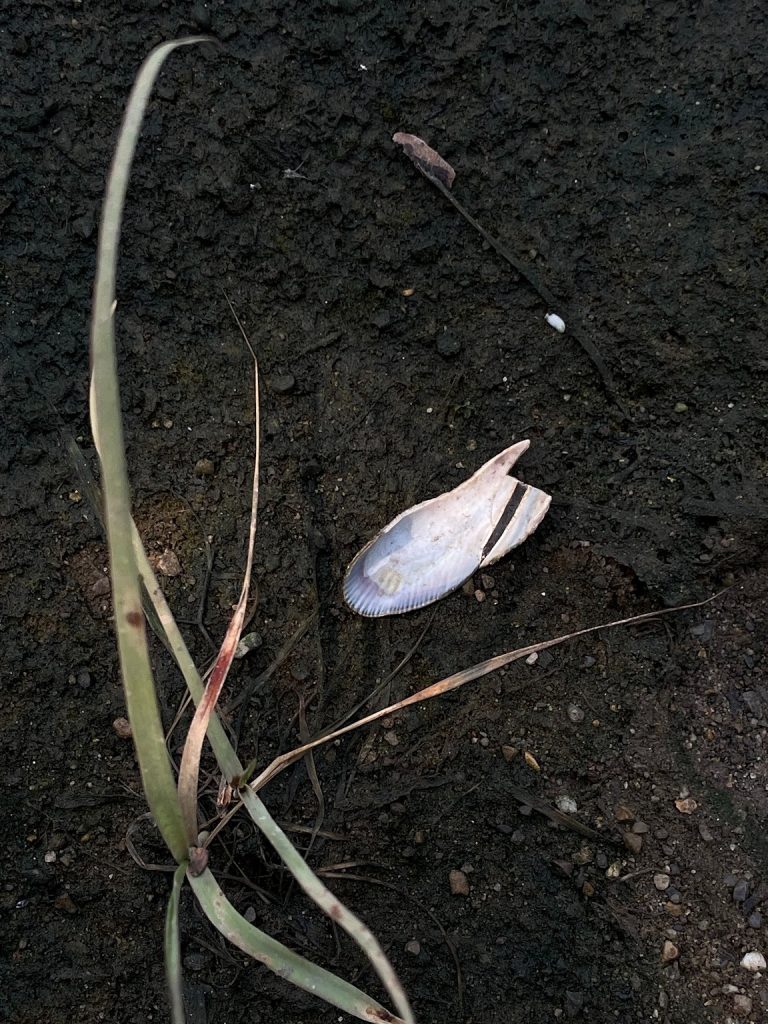
While it is interesting to see these mammals visit the salt marsh, their presence is detrimental to the saltmarsh cordgrass plugs. In the trail camera photos, it seems like the raccoons and lone opossum are digging into the mud to search for prey. This loosens the sediment, and is likely making the plugs more susceptible to washout. We did see two more uprooted plugs from the most recent plantings, but like previous weeks, the majority of the plugs remain rooted into the sediment. Since both the Virginia opossum and raccoon feed on marine invertebrates like ribbed mussels, the presence of predators may harm future attempts to support saltmarsh cordgrass with ribbed mussels. In fact, we found a few broken and empty ribbed mussel shells while conducting our marsh survey.
Taking a closer look at the saltmarsh cordgrass, we were surprised to see spots of a dark red-brown substance on the leaf blades of some plugs. As we progressed through our plot surveys, we found that these spots were on all the plugs in the restoration site. At a second glance, we realized that these red-brown spots were also on the fenceposts and bulkhead wall of the site, and matched up with the water level of high tide. One hypothesis is that the red-brown residue is the result of an algal bloom in the Creek. During weather events like heavy rainfall, the city’s wastewater system reaches capacity, which forces a combination of untreated sewage and stormwater runoff to empty into our waterways. These combined sewer overflows (CSOs) are high in pathogens, pollutants, and nutrients that encourage the growth of algae already living in the Creek. During the hot summer months, the warm temperatures and high nutrient levels cause large algal blooms that can be harmful for marine life.
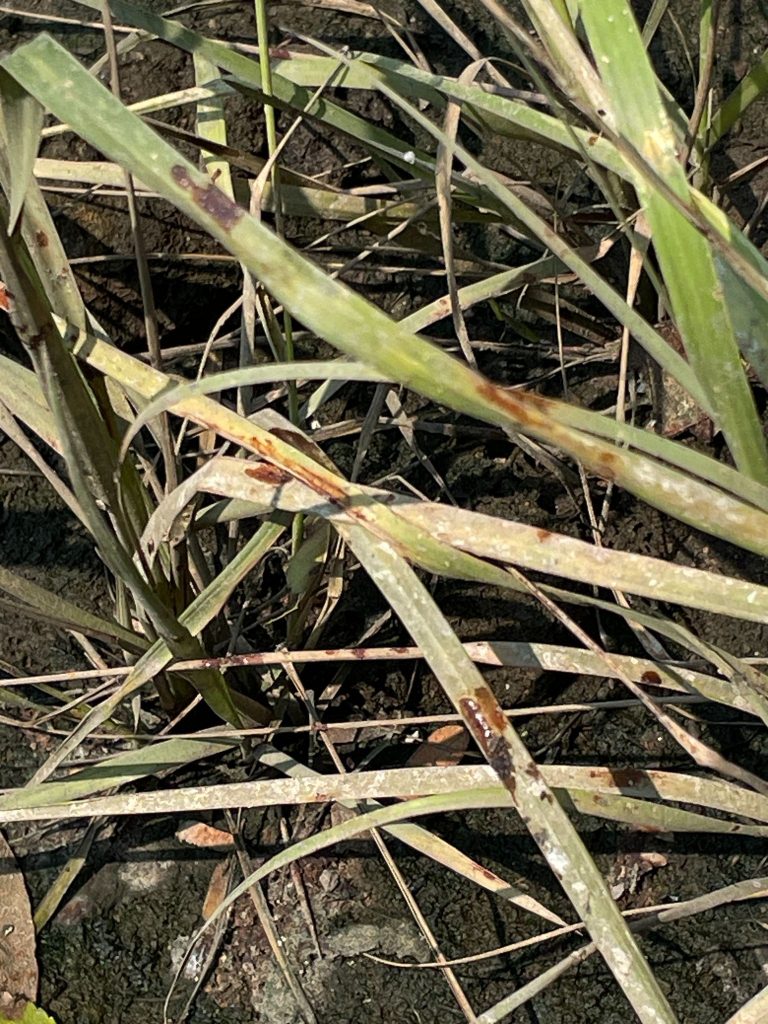
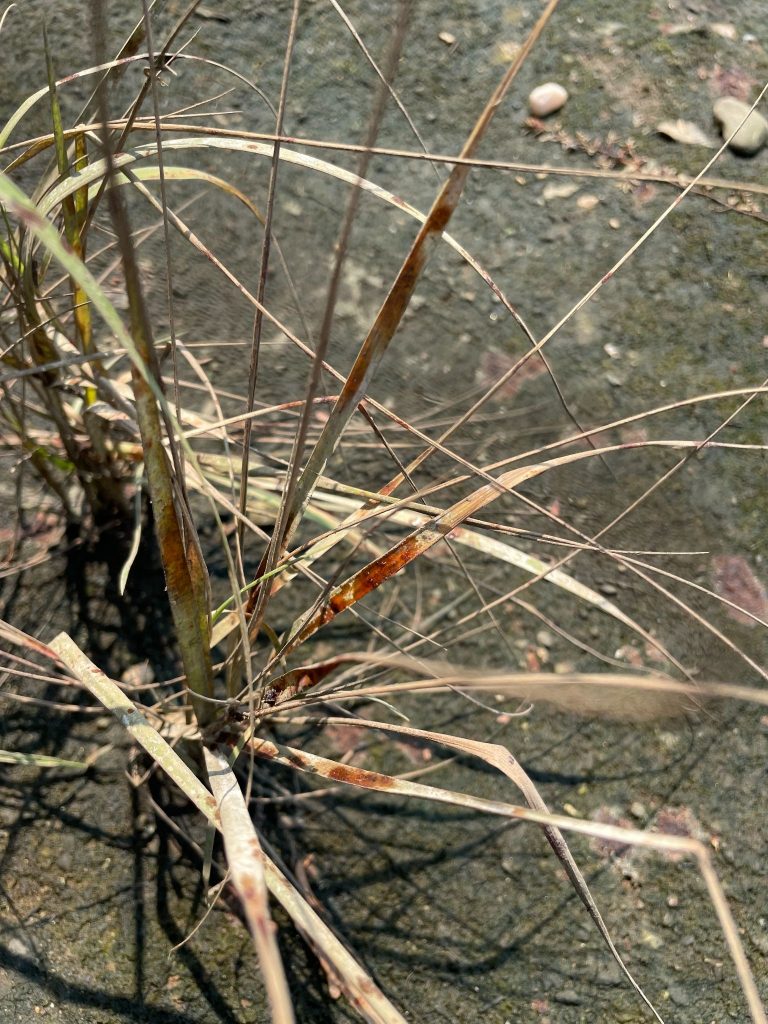
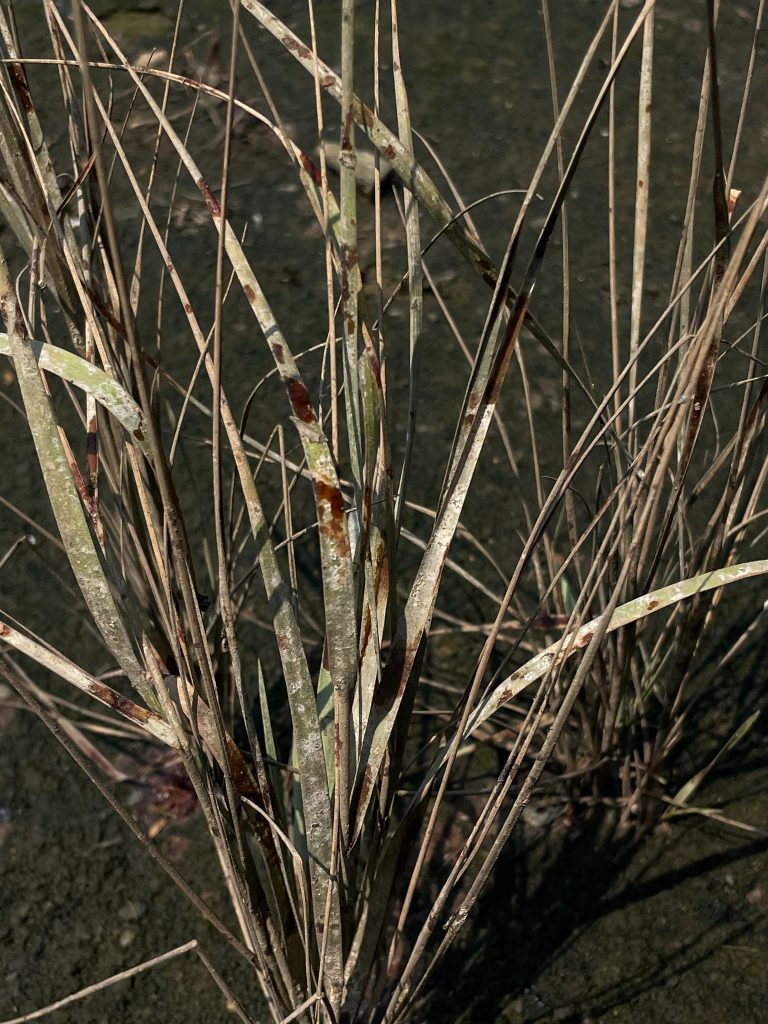
Another theory is that the spots are the result of chemical runoff from the Creek. Though the height of industrialization along Newtown Creek has passed, there are many businesses that still operate beside the Creek, and it is very possible that the red-brown spots are residue from chemical pollution. Since this is the first time we have observed this at Dutch Kills, we are not yet sure how or if the saltmarsh cordgrass plugs will react.
For the 2026 TIDALS fellows, this was our final marsh survey trip to Dutch Kills! Over this 10-week program, we have replanted the saltmarsh cordgrass at Dutch Kills, checked the trail camera daily, and taken hundreds of photos of the plugs. NCA will continue to monitor Dutch Kills, its saltmarsh cordgrass and all its wildlife. Dutch Kills experienced a difficult winter in 2025, so we hope that this year, the marsh will make it past the cold months and continue to grow. Thank you for following along with these journal entries, and we hope that they may have answered some of your questions about Dutch Kills and inspire you to learn more about NCA and their work around the Creek!
— 2026 TIDALS Fellows (Saanvi Sherchan, Jonah Rurak, Ramisa Rifa, Rachel Mendoza, Pawel Zyzanski)