Visit #1 : June 16, 2026
One of the five tidally influenced tributaries of Newtown Creek, Dutch Kills was once part of the active and bustling industrial zone of the creek. Due to aging infrastructure, its waters are no longer open to commercial boat traffic. In 2018, the NYC DEP installed a pilot project of 1400 cubic yards of salt marsh restoration in Dutch Kills. The intention was to recreate the original ecology of Newtown Creek, which was a sprawling biodiverse salt marsh that provided habitat for numerous species of birds, fish, crabs, and other wildlife. The addition of salt marsh could improve water quality and help mitigate the two hundred years of industry, manufacturing, and pollution that have damaged Newtown Creek. Runoff, heavy metals, raw sewage, and oil dumping have all contributed to the polluted state of the Creek’s sediment and waters.
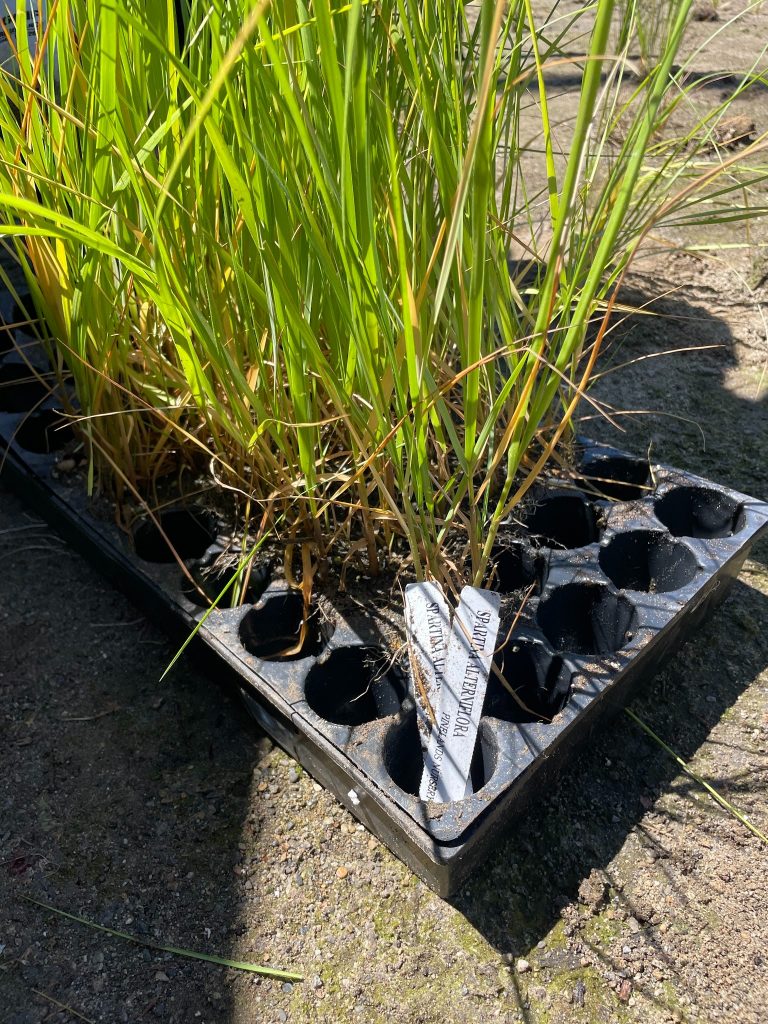
In 2025, NCA and volunteers returned to the restoration site to replant a total of over 3,000 plugs of saltmarsh cordgrass (Spartina alterniflora). The new plugs initially flourished, maturing and growing over two feet tall. Though Dutch Kills no longer harbors commercial maritime vehicles, the Creek conditions still pose many challenges for newly-planted saltmarsh cordgrasses. Flocks of Canada geese (Branta canadesis) feast on the new growth. Tidal activity and ice floes have uprooted both plugs of marsh grass and anti-goose fence posts. Despite these obstacles, the Restoration Team continues to visit the Dutch Kills site, replanting saltmarsh cordgrass, monitoring marsh growth, reinforcing geese deterrents, and noting wildlife presence.
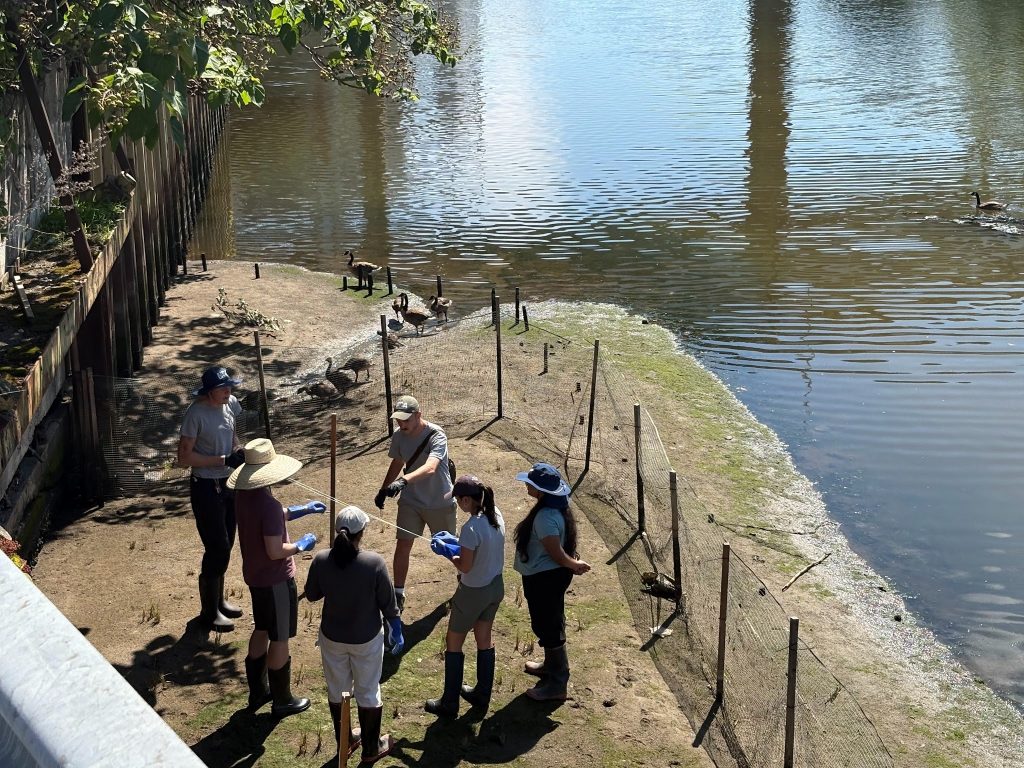
On June 16, the TIDALS 2026 Fellows pulled on our muckboots and took our very first visit to Dutch Kills to complete a survey of the salt marsh. Stepping into the fenced-off restoration area, we were careful not to trample on the remaining plugs of saltmarsh cordgrass. The restoration area was created using fresh, uncontaminated sand, and sits flush against the metal bulkhead. While plant cover was sparse, the old plugs of saltmarsh cordgrass were dotted with new growth.
On this first visit, we used rope and metal stakes to create three plots placed along the restoration site. We also set up a trail camera to monitor wildlife visits from geese and other critters. During each visit, we will take pictures of the plots, and record our observations – monitoring plant health, new growth, and the presence of both debris and wildlife at Dutch Kills. After each visit, we’ll be writing a summary of our findings and uploading here as a weekly journal entry. Our hopes are to improve accessibility of what’s happening with progress of this project and inform future maintenance decisions for the marsh.
Despite the challenges the marsh continues to face, we observed various species of wildlife utilizing the space. Multiple species of birds including Canada geese, laughing gulls, and a young mockingbird were spotted. There was plenty of life to see in the Creek itself, like schools of mummichog and even two horseshoe crabs!
Visit #2 : June 24, 2026
After noting the condition of the restoration site last week, TIDALS Fellows and NCA staff returned to Dutch Kills on June 24 to complete another replanting session. After carting pallets of marsh grass over the Greenpoint Avenue bridge, we arrived at Dutch Kills ready to replant. Using an auger and drill, we bored clusters of three holes in the sand and placed one plug of marsh grass in each hole. The restoration site is scattered with uprooted plugs from past replantings, where tidal action washed out the plugs before the marsh grass could establish deep roots. To give these plugs the best chance of persisting, we carefully and firmly packed the displaced sediment around the base of the plugs.
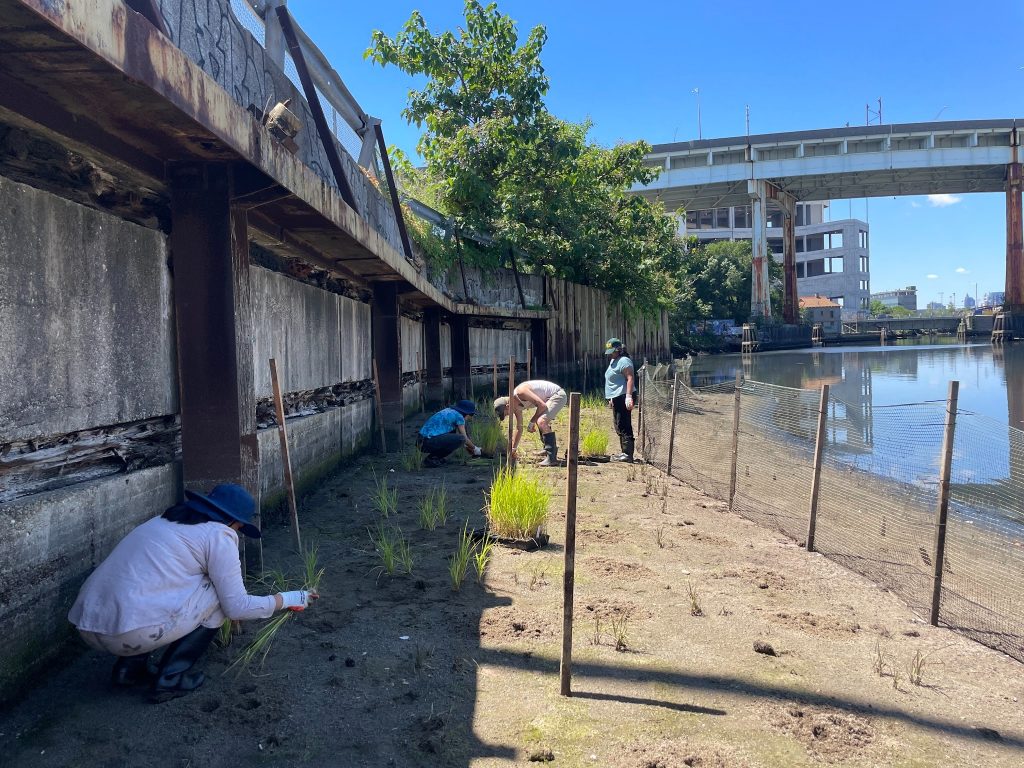
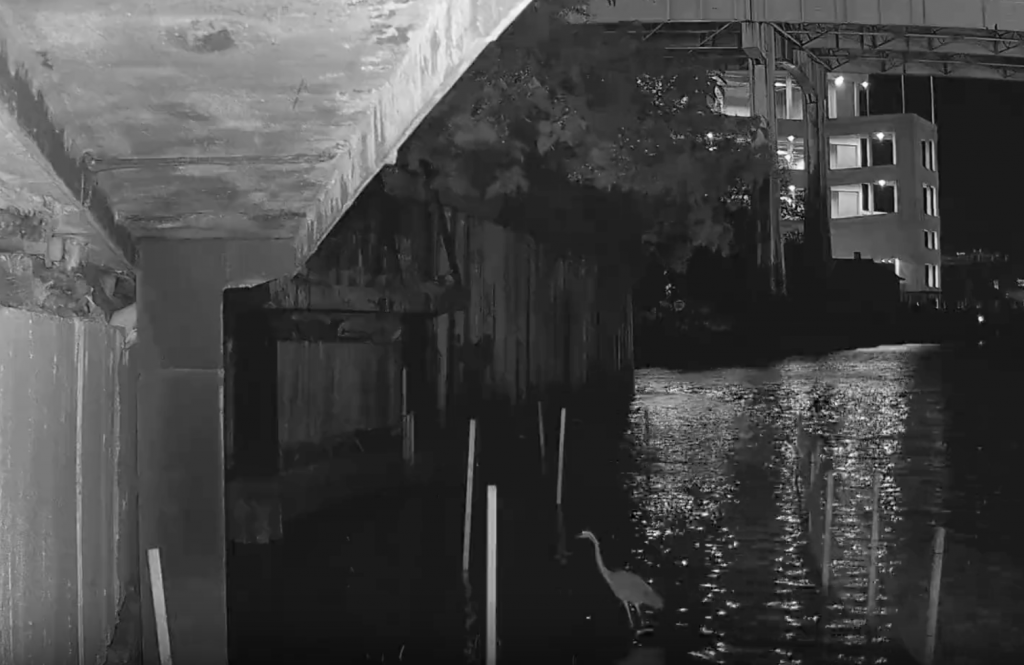
As we planted, we were joined by the familiar wildlife of the creek. Laughing gulls darted above us, and a flock of geese slowly began gathering on the far side of the restoration site. Over the last week, our trail cam has captured photos of tidal action, grazing geese, and even a nighttime video of an egret, wading at low tide. Seeing egrets in the restoration site is a good sign, as it indicates that this restored salt marsh is providing habitat for the wildlife of Newtown Creek. At the same time, the geese presence is a threat to the survival of these new marsh grass plugs. Upon our arrival, we noticed that several geese were already present at the far side of the fencing. As we planted more marsh grass, we noticed even more geese were swimming down the Creek towards the restoration site and the freshly planted grasses. After planting, we completed our survey, taking photos of all the plots and noting their condition. Over the next weeks, we will use our weekly surveys to track grazing by geese and other parameters of marsh health: the number of plugs per plot, estimated percentage of live plugs, new growth, washout, the presence of trash within the plots, and wildlife. The trail camera we set up last week has already captured images of some birds near the restoration site.
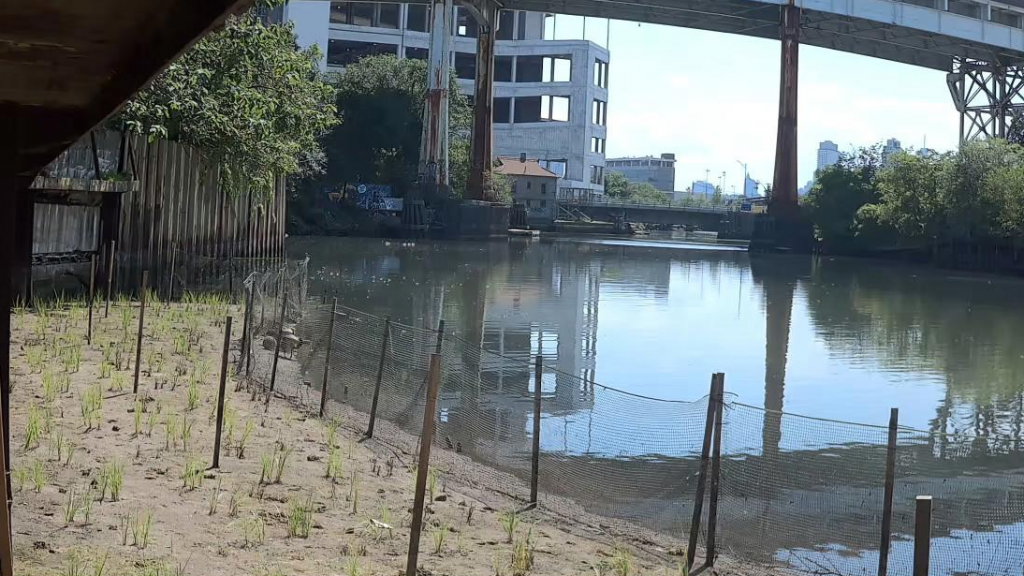
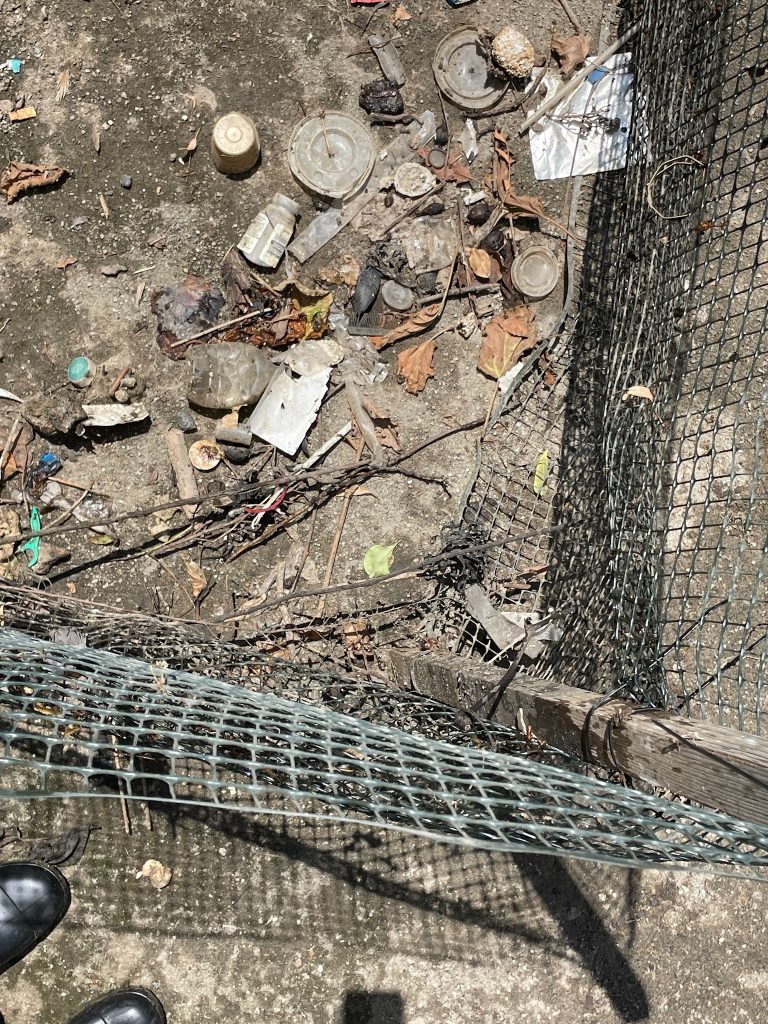
On this visit, we observed no trash inside the plots but a significant amount of waste and debris in other parts of the salt marsh. This waste ranged from pieces of plastic food wrappers to chunks of fatbergs. One particular corner of the fence collected a pile of trash, which mostly consisted of plastic waste. It seems likely that at high tide, the trash and debris floats above the fence but gets trapped when the tide recedes and the water level drops. In the future, we plan on bringing trash bags and grabbers to remove some of the debris tangled up inside the fencing. We are excited to return to the salt marsh next week and see how these new plugs of marsh grass adjust to life in Dutch Kills!